
Hyptiotes cavatus
(Hentz, 1847)
triangle weaver
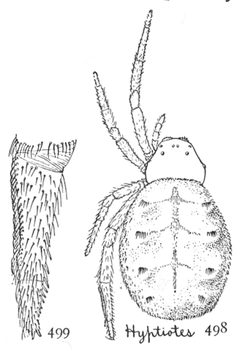
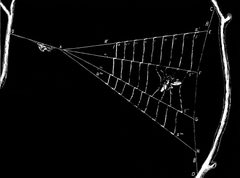
Hyptiotes cavatus, commonly known as the triangle weaver, is a small cribellate orb-weaving spider in the Uloboridae. It is the sole eastern North American in its , distinguished by its unique triangular web and remarkable prey capture mechanism. Unlike most spiders, it lacks venom glands and subdues prey through specialized silk wrapping. The spider uses elastic potential energy in its web to spring forward and entangle prey upon release of a held anchor line.
Pronunciation
How to pronounce Hyptiotes cavatus: /hɪpˈtiː.oʊtiːz ˈkævəˌtəs/
These audio files are automatically generated. While they are not always 100% accurate, they are a good starting point.
Identification
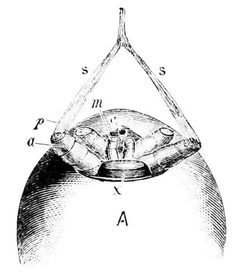
females measure 3-4 mm in body length; males are smaller at 2-3 mm. The web is diagnostic: a triangular sector of an orb web, typically built waist-high in vegetation. Distinguished from other orb-weavers by reduced web size, non-sticky cribellate silk, and the spider's characteristic posture bridging the anchor thread. The sole eastern of Hyptiotes; three occur chiefly in western North America. Possesses only six functional , with lateral eyes and lacking retinas.
Images
Habitat
Found in vegetation approximately waist-high, including weeds, goldenrod, aster, black locust, and other flowering plants. Also occurs on bridges, structures, and twigs of trees and shrubs.
Distribution
Eastern United States and adjacent southern Canada.
Diet
Feeds on small flying insects that contact the web. Prey items have been observed to include pomace flies and other small, relatively innocuous insects.
Behavior
Constructs a triangular web and positions its body as a bridge between an anchor line and the main trap line. Uses legs to reel in silk, increasing tension in the web structure. Upon prey contact, instantly releases the held anchor line, causing the web and spider to spring forward 2-3 cm at high speed. This releases up to 4 additional web strands onto the prey; the sudden stop winds prey further into the strands. This elastic potential energy mechanism functions analogously to a slingshot or bow and arrow.
Ecological Role
of small flying insects in herbaceous and shrubby vegetation.
Human Relevance
Non-venomous and harmless to humans. Webs may be encountered by naturalists and hikers in late summer and early autumn.
Similar Taxa
- Hyptiotes (other species)Three western North American share triangular web architecture and cribellate silk, but H. cavatus is the only eastern .
- UloborusRelated cribellate orb-weaver ; also lacks venom glands and constructs reduced orb webs, but builds complete orbs rather than triangular sectors and has different web posture and prey capture .