
Trogloraptor
Griswold, Audisio & Ledford, 2012
Cave robber
Species Guides
1- Trogloraptor marchingtoni(cave robber spider)
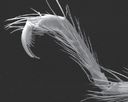
Trogloraptor is a of large cave-dwelling spiders to southwestern Oregon, representing the sole genus in the Trogloraptoridae. The genus contains one described , Trogloraptor marchingtoni, distinguished by unique hook-like claws on the of its legs. Discovered in 2010 and described in 2012, this represents one of only three new spider families described since 1990. The genus name combines Greek and Latin roots meaning "cave robber," referencing both its and predatory appendages.
Pronunciation
How to pronounce Trogloraptor: //ˌtrɒɡloʊˈræptər//
These audio files are automatically generated. While they are not always 100% accurate, they are a good starting point.
Identification
Distinguished from all other North American spiders by the combination of: (1) elongated, flexible, toothed hook-like claws on the of all legs; (2) six arranged in three pairs; (3) cave-dwelling in southwestern Oregon; and (4) large body size with leg span up to 7.6 cm. The claws superficially resemble those of the Australian/New Zealand Gradungulidae (e.g., Spelungula), but Trogloraptor is not closely related and differs in eye number and abdominal patterning. Other spiders with somewhat hooked tarsal claws (Doryonychus, Hetrogriffus, Celaenia) have different body forms, eye arrangements, and geographic distributions.
Images
Appearance
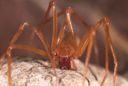
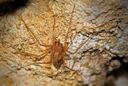
Large spiders with yellow-brown coloration overall. Body length 7–10 mm in males, 8–10 mm in females. Maximum leg span reaches 3 inches (7.6 cm). bears a dark brown V-shaped mark. are orange-brown. is purple-brown with faint light-colored chevron markings. is pear-shaped with a -shaped sternum. Abdomen is oval and sparsely covered with small setae. Males possess enlarged piriform . Most distinctive feature: six (reduced from typical eight in spiders) and elongated, flexible, teethed hook-like claws on the terminal segments () of all legs.
Habitat
Strictly cave-dwelling in southwestern Oregon, found deep inside limestone caves. Constructs simple webs attached to cave ceilings. One specimen was recovered from understory debris of old-growth redwood forest in northwest California, suggesting possible surface or capability, though this specimen may represent an undescribed species. Requires stable cave microclimate with high humidity and darkness.
Distribution
to southwestern Oregon, specifically Josephine County and vicinity (type localities: M2 cave near Grants Pass, and additional caves in Josephine County). Single unconfirmed record from old-growth redwood forest in northwest California. Potential historical range may have been broader during Pliocene when redwood forests covered more extensive areas of western North America.
Behavior
Constructs simple, sparse webs with few strands suspended from cave ceilings. Hangs upside down from webs, likely in ambush posture. Extremely shy and unaggressive; flees immediately upon illumination. Captive specimens refused all offered prey (, crickets, other spiders) and starved after two weeks, suggesting highly specialized prey requirements that remain unidentified. Probable prey capture mechanism involves snatching flying insects with claws while suspended, similar to hypothesized for Spelungula cavernicola.
Ecological Role
Presumed in cave , though specific prey and ecological interactions remain undocumented. As one of few large predators in Oregon cave systems, likely occupies significant trophic position. Potential prey source for cave-dwelling vertebrates.
Human Relevance
Scientifically significant as type of a new spider , representing rare discovery of higher-level arachnid in North America. Named in honor of Neil Marchington, amateur cave biologist and deputy sheriff who assisted in discovery. Subject of conservation concern due to restricted range and vulnerability of cave to disturbance, groundwater , and vandalism. Not known to be harmful to humans; venom effects unstudied but spiders are non-aggressive and avoid contact.
Similar Taxa
- Gradungulidae (Australian/New Zealand cave spiders)Share of elongated tarsal claws and cave-dwelling habit, but differ in number (eight vs. six), abdominal patterning, and are geographically isolated with no close phylogenetic relationship
- Dysderoidea (goblin spiders and relatives)Initially hypothesized as related based on some morphological features, but excluded by phylogenetic analysis; differ in lacking claws and having different respiratory anatomy
More Details
Evolutionary significance
Trogloraptoridae represents one of only three new spider described since 1990, and the first new family established for a North American spider since the 1890s. Molecular estimates suggest family divergence from other spiders approximately 130 million years ago, indicating a relict lineage. Phylogenetic position remains unresolved: ribosomal studies exclude it from Dysderoidea, and it possesses mosaic of primitive and derived traits requiring revision of spider evolutionary understanding.
Conservation status
Vulnerable due to extremely restricted known range, small sizes typical of cave endemics, and high sensitivity to disturbance. Cave are threatened by groundwater from surface development, direct damage from spelunking activities, and vandalism. Protection efforts by Western Cave Conservancy critical to survival.
Discovery circumstances
Discovered 2010 by citizen scientists from Western Cave Conservancy (Geo Graening, Neil Marchington, Ron Davis, Daniel Snyder). Formal description 2012 by California Academy of Sciences arachnologists (Charles Griswold, Tracy Audisio, Joel Ledford). Published in ZooKeys 215, one of journal's most-cited papers.