
Trogloraptoridae
Griswold, Audisio & Ledford, 2012
Cave Robber Spiders
Genus Guides
1- Trogloraptor(Cave robber)
Trogloraptoridae is a of spiders established in 2012 to accommodate the single Trogloraptor, found in caves and old-growth forests of the Pacific Northwest. The family was erected based on the unique of Trogloraptor marchingtoni, which possesses distinctive claws unlike any other known spider. This discovery marked the first new family of spiders described from North America since the 1890s. The family represents a significant evolutionary lineage that has forced revisions to understanding of spider .
Pronunciation
How to pronounce Trogloraptoridae: /ˌtrɒɡloʊˈræptərɪdɛə/
These audio files are automatically generated. While they are not always 100% accurate, they are a good starting point.
Identification
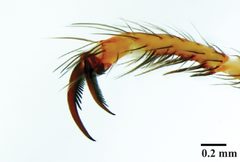
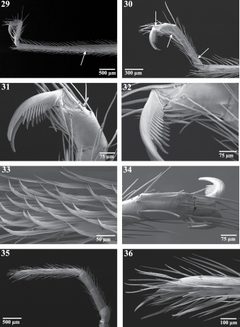
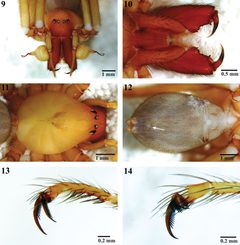
Members of this are recognized by their large size (leg span up to 7.6 cm), yellow-brown coloration, and most notably the elongated, sickle-shaped, toothed claws on the of all legs. They possess only six rather than the typical eight found in most spiders. The claws are highly articulated and blade-like, unique among spiders. These features distinguish Trogloraptoridae from all other spider families, including the superficially similar goblin spiders (Oonopidae) with which they share some evolutionary affinities.
Images
Habitat
Known from caves in southwestern Oregon and old-growth redwood forests in northern California. Specimens have been found hanging beneath webs on cave ceilings. The true extent of suitable remains unknown, as the discovery of such a relatively large, distinctive spider in 2010-2012 suggests that additional may exist in unsurveyed caves and forest habitats of western North America.
Distribution
Currently documented from southwestern Oregon (type locality in caves near Grants Pass) and northern California (old-growth redwood forests). The full geographic range is suspected to be broader, potentially extending throughout the Pacific Northwest region of North America.
Behavior
Individuals hang upside down beneath simple, webs on cave ceilings. The specialized claws suggest an active predatory strategy, but specific prey capture has not been observed. Live specimens brought into laboratory conditions refused to feed, indicating highly specialized ecological requirements or sensitivity to environmental disturbance.
Human Relevance
The discovery of this generated significant scientific and public interest, highlighting the value of cave conservation and citizen science contributions through organizations like the Western Cave Conservancy. The epithet marchingtoni honors Neil Marchington, an amateur biologist and deputy sheriff who first documented the spiders. The find demonstrated that large, distinctive arthropods remain undiscovered in well-studied regions like the western United States.
Similar Taxa
- Oonopidae (goblin spiders)Shares evolutionary affinities as a close relative, but distinguished by the unique claws, larger body size, six versus eight, and different preferences
- Other Dysderoidea familiesTrogloraptoridae was placed in the superfamily Dysderoidea based on morphological analysis, but differs markedly in claw structure and number from all other members
More Details
Evolutionary significance
Trogloraptoridae possesses a mosaic of ancestral, widespread features and evolutionary novelties that has required revision of spider . The appears to represent a relictual lineage with deep evolutionary history.
Conservation concerns
Cave-dwelling are vulnerable to disturbance from spelunking, vandalism, and surface development that can alter groundwater chemistry or cause collapse. The small, isolated nature of cave populations makes them particularly susceptible to local extinction.
Discovery history
Initial specimens were found in 2010 by citizen scientists from the Western Cave Conservancy collaborating with arachnologists from the California Academy of Sciences. The formal description was published in ZooKeys in 2012, representing one of the most significant spider discoveries of the 21st century.