
Xysticus luctuosus
(Blackwall, 1836)
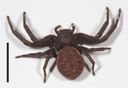
Xysticus luctuosus is a of ground crab spider in the Thomisidae, first described by Blackwall in 1836. It has a broad distribution spanning North America, Europe, Turkey, the Caucasus, Russia (from European to Far East regions), Kazakhstan, Iran, and Central Asia. As a member of the Xysticus, it exhibits the characteristic crab spider body plan with laterally extended legs adapted for ambush . The species has been documented in 45 iNaturalist observations, indicating moderate citizen science engagement.
Pronunciation
How to pronounce Xysticus luctuosus: //ˈzɪstɪkəs lʌkˈtuːəsəs//
These audio files are automatically generated. While they are not always 100% accurate, they are a good starting point.
Identification
Distinguished from other Xysticus by examination of male copulatory organs and female , requiring microscopic or detailed morphological analysis. The Xysticus can be separated from the similar genus Ozyptila by arrangement and other subtle characters. Within Xysticus, species-level identification typically requires examination of genitalic structures.
Images
Appearance
As a Xysticus , possesses the typical ground crab spider : flattened body with laterally extended first and second pairs of legs held in crab-like posture. Legs bear spines on the inner surfaces to secure prey. Coloration and specific markings not documented in available sources for this species.
Habitat
Distribution
North America (Canada, USA), Europe, Turkey, Caucasus region, Russia (European to Far East), Kazakhstan, Iran, Central Asia. Present in Flanders, Belgium. The broad transcontinental distribution spans both the Palearctic and Nearctic regions.
Seasonality
have been observed active in early spring (March) based on observations of ; specific for this not documented. As a temperate species, likely follows seasonal patterns typical of ground-dwelling crab spiders with adult activity during warmer months.
Behavior
As a ground crab spider, hunts by ambush rather than web-building. Has been observed in pre-ballooning posture on elevated structures, suggesting by aerial ballooning as documented in other Xysticus . Juveniles and small may climb vertical objects and release silk threads to catch wind currents for dispersal.
Ecological Role
of small arthropods in ground-level and low vegetation . Serves as prey for spider wasps in the Dipogon, which have been documented specifically hunting Xysticus .
Human Relevance
Contributes to natural pest control in agricultural and natural landscapes. Subject of citizen science documentation through iNaturalist platform.
Similar Taxa
- Xysticus mongolicusFormerly classified in Xysticus, now transferred to Spiracme based on male copulatory organ characters; shares similar preferences for dry sandy environments
- Ozyptila speciesOverlapping of crab spiders with similar ground-dwelling habits; distinguished by arrangement and subtle morphological characters
More Details
Taxonomic Note
The Xysticus has undergone revision, with some transferred to other genera based on phylogenetic analysis. The species was originally described as Thomisus luctuosus by Blackwall in 1836.
Predation by Spider Wasps
Spider wasps in the Dipogon, particularly D. calipterus, have been documented hunting Xysticus as prey. These attack spiders on tree trunks and vegetation, stinging them into paralysis for use as larval food provisions.