Theridion pictum
(Walckenaer, 1802)
Painted Cobweb Weaver
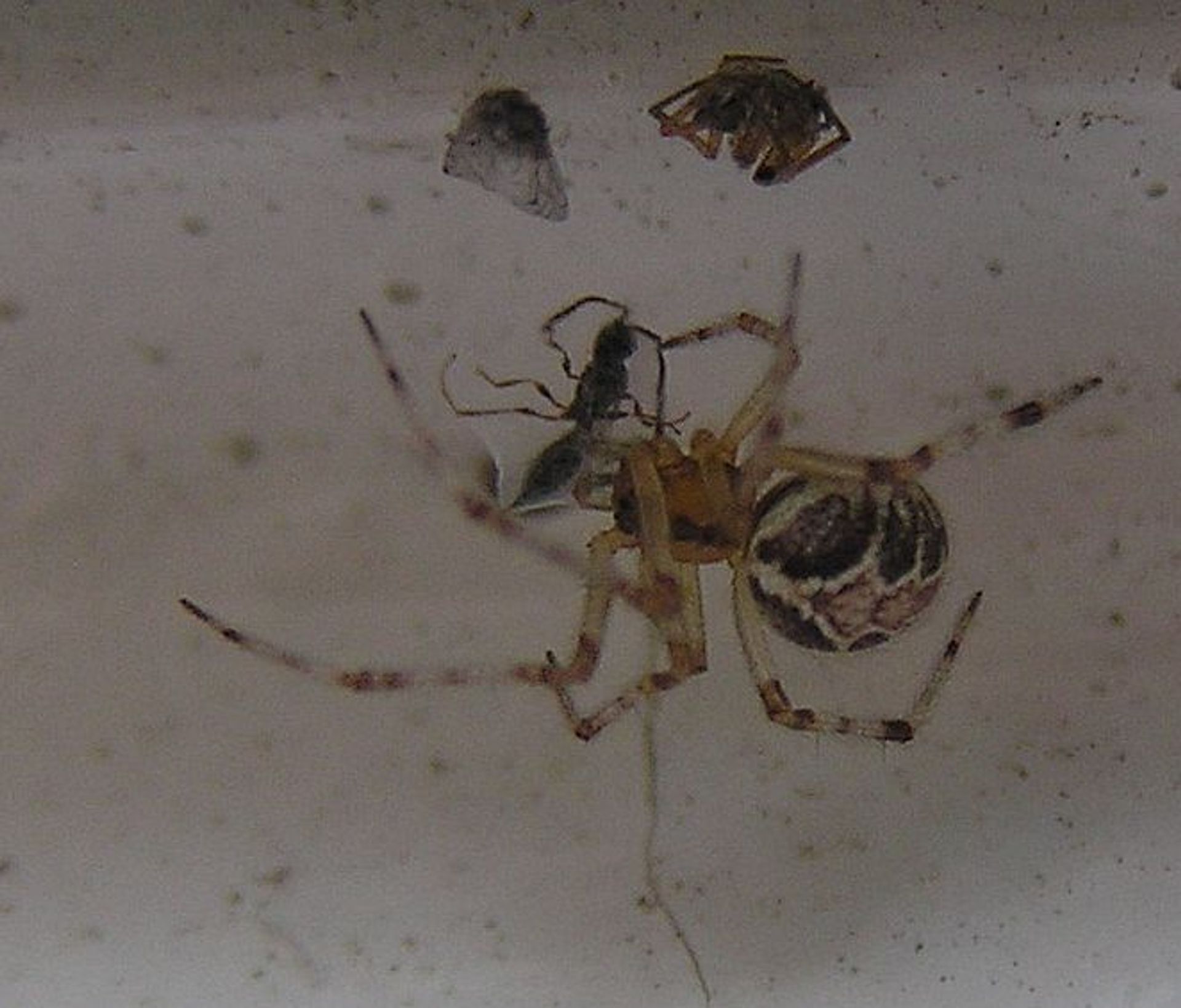
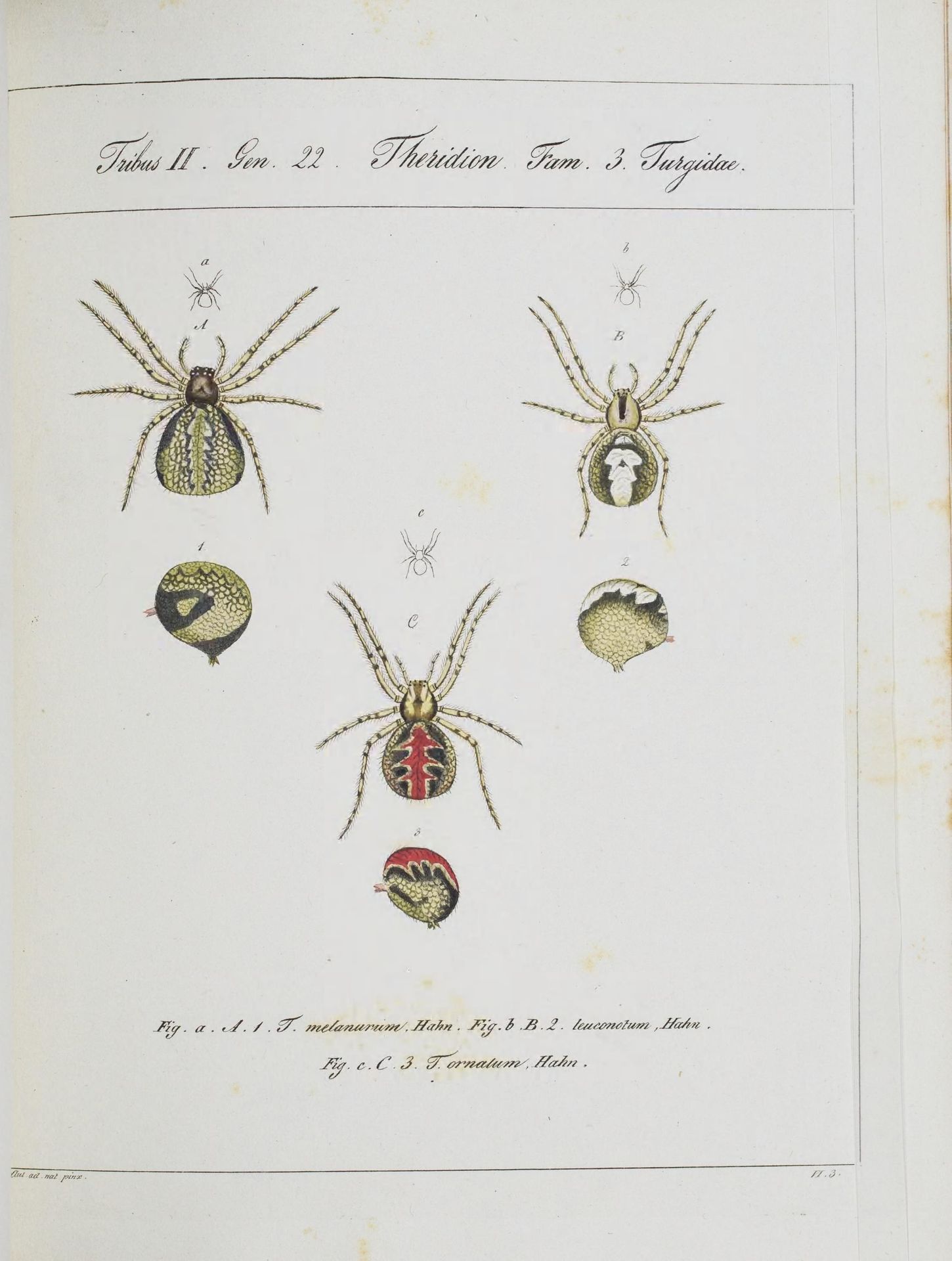
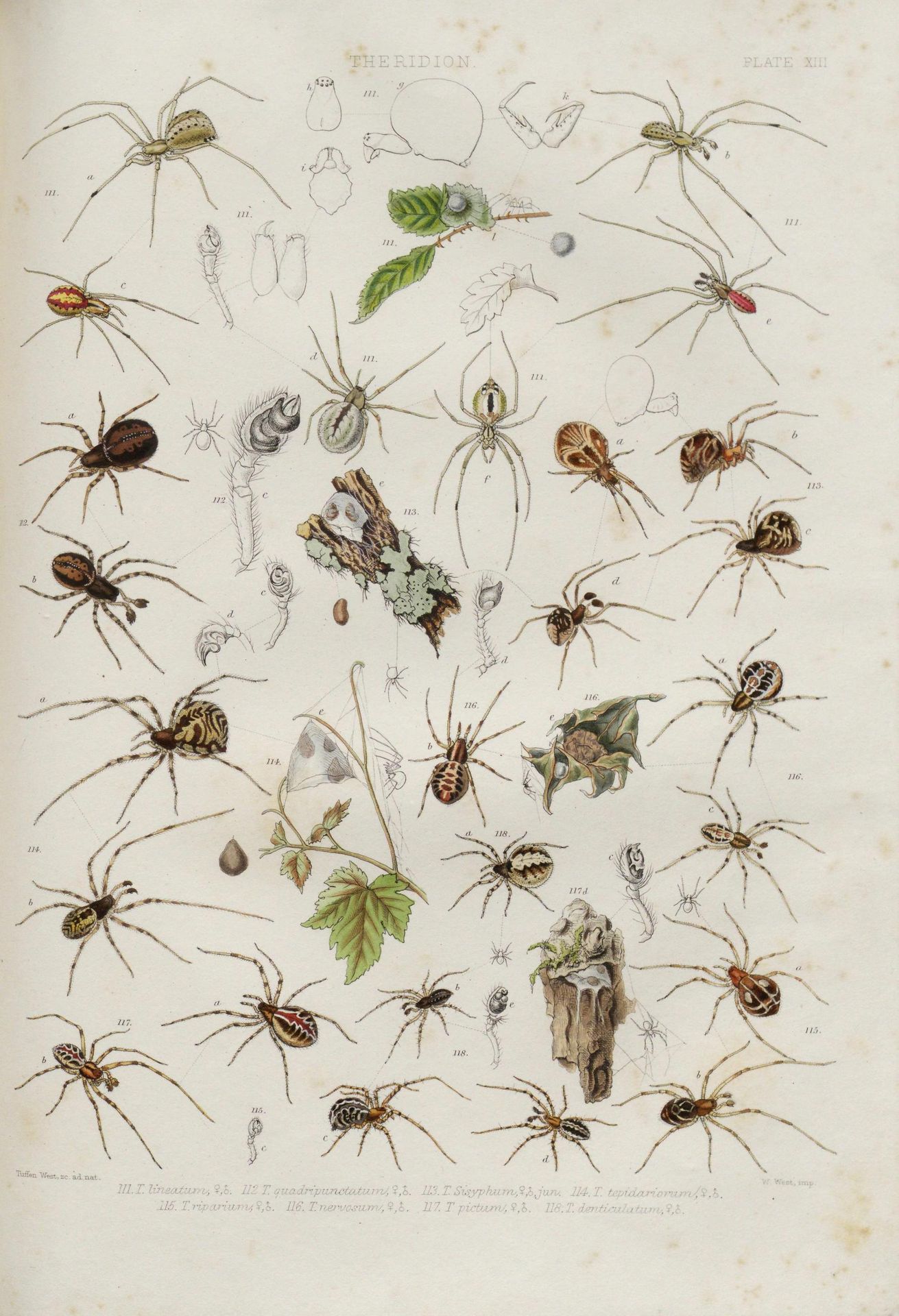
Theridion pictum is a cobweb in the Theridiidae and the of the Theridion. It has a Holarctic distribution spanning North America, Europe, and Asia, with in South Africa. The species constructs three-dimensional webs in damp, low-lying areas, often on vegetation or man-made structures. mature in early to mid-summer, with females persisting into autumn.
Pronunciation
How to pronounce Theridion pictum: /ˈθɛrɪdiˌɒn ˈpɪktəm/
These audio files are automatically generated. While they are not always 100% accurate, they are a good starting point.
Images
Habitat
Constructs three-dimensional cobwebs in dark places close to the substrate. Frequently found under stones. Occurs in low, damp areas including wetlands, among moss and litter. Webs built on bushes, tall grasses, flowers, posts, and fences. Recorded from savanna at elevations of 219–1341 m, and from avocado and macadamia orchards.
Distribution
Holarctic distribution: North America (United States, Canada), Europe, North Africa, Caucasus, Russia (Europe to Far East), Kazakhstan, Turkmenistan, China, and Japan. to South Africa (Mpumalanga, KwaZulu-Natal, Limpopo).
Seasonality
Males and females mature in early to mid-summer. Females may persist into November.
Behavior
Constructs three-dimensional webs in dark, sheltered locations. Webs are typically positioned close to the substrate.
More Details
Taxonomic history
Originally described by Charles Athanase Walckenaer in 1802 as Aranea picta. The picta was validated by the International Commission on Zoological in 1958 (Opinion 517). The has not been revised in South Africa.
Conservation status
Listed as Least Concern by the South African National Institute due to its wide global range.