
Theridion albidum
Banks, 1895
White Long-legged Cobweaver
Theridion albidum is a of cobweb spider in the Theridiidae, first described by Banks in 1895. It is native to North America and has been documented in the United States and Canada. As a member of the Theridion, it belongs to a large and diverse group of comb-footed spiders that construct irregular, three-dimensional webs. The species is known by the "White Long-legged Cobweaver," though detailed natural history information remains limited in published sources.
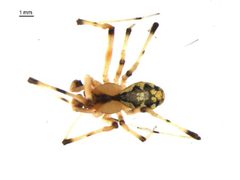
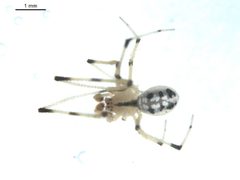
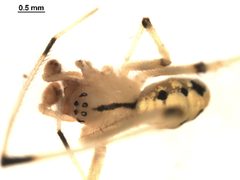
Pronunciation
How to pronounce Theridion albidum: //θɛˈrɪdi.ən ælˈbaɪdəm//
These audio files are automatically generated. While they are not always 100% accurate, they are a good starting point.
Identification
Members of Theridion can be challenging to distinguish from one another without close examination. Theridion albidum is characterized by its pale coloration, as suggested by the specific epithet "albidum" (meaning whitish). The "White Long-legged Cobweaver" indicates relatively elongated legs compared to body size. Accurate identification to level typically requires examination of genitalia under magnification and comparison with described specimens.
Images
Distribution
United States and Canada; North America.
Ecological Role
As a cobweb spider, Theridion albidum likely functions as a of small arthropods, contributing to local insect through its web-based hunting strategy.
Similar Taxa
- Parasteatoda tepidariorumAlso a theridiid cobweb spider found in North American human habitations, but differs in being strongly associated with buildings and having a more distribution linked to human commerce. Theridion albidum appears more restricted to natural or less disturbed .
- Other Theridion speciesNumerous exist in North America, many requiring genitalic examination for reliable separation. T. albidum may be distinguished by its pale coloration and leg proportions where these traits are consistent.