
Dipoena
Thorell, 1869
tangle-web spiders
Species Guides
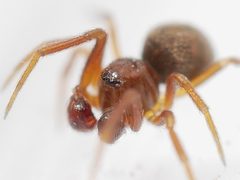
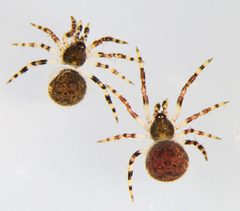
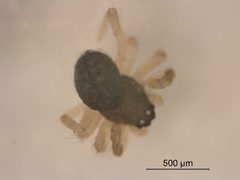
4Dipoena is a of tangle-web spiders ( Theridiidae) containing approximately 162 distributed worldwide. The genus was established by Tamerlan Thorell in 1869. Males are distinguished by a characteristically high, cylindrical often bearing grooves or depressions on the dorsum, while female carapaces are rarely modified though sometimes elevated. Species occur across Asia, Central America, North America, Africa, the Caribbean, Europe, South America, Australia, and Pacific islands including Vanuatu.
Pronunciation
How to pronounce Dipoena: /dɪˈpiː.nə/
These audio files are automatically generated. While they are not always 100% accurate, they are a good starting point.
Identification
Males: typically high and cylindrical with grooves or depression on dorsum. Females: carapace rarely modified, sometimes high. These carapace features distinguish Dipoena from other theridiid .
Images
Distribution
Worldwide: Asia, Central America, North America, Africa, Caribbean, Europe, South America, Australia, Vanuatu. Specific documented locations include Brazil (Mato Grosso do Sul, São Paulo, Paraná states), Bolivia, and Germany (Berlin).
Seasonality
of at least one (D. torva) active in summer; juveniles present before and after adult activity period.
Diet
At least one (D. torva) feeds predominantly on ants.
Life Cycle
activity concentrated in summer months for studied ; stages occur outside main adult period.
Behavior
At least one (D. torva) exhibits activity and has been observed at heights of approximately 10 meters on tree stems. Mating has been described for this species.
More Details
Species diversity
As of September 2019, the contains 162 described with ongoing taxonomic work, including six new species described from Brazil in 2013.
Taxonomic revisions
Numerous synonymies exist within the , including transferred from other genera (e.g., Euryopis) and subsequent recombinations.