
Dipoena washougalia
Levi, 1953
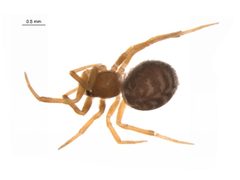
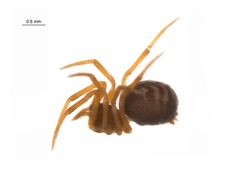
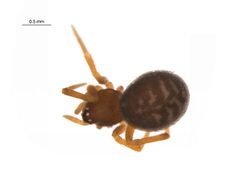
Dipoena washougalia is a of cobweb spider in the Theridiidae, first described by Levi in 1953. It is known from the United States, with records primarily from the Pacific Northwest region. The Dipoena comprises small spiders that construct tangled, irregular webs. Information on this particular species remains limited.
Pronunciation
How to pronounce Dipoena washougalia: //dɪˈpiːnə wæʃuːˈɡæliə//
These audio files are automatically generated. While they are not always 100% accurate, they are a good starting point.
Identification
As a member of the Dipoena, this likely exhibits the characteristic small body size and rounded typical of the group. Dipoena species generally have relatively short legs compared to some other theridiids and possess the comb-like serrated bristles (setae) on the hind used for drawing out silk. Specific diagnostic features for D. washougalia require examination of genitalic .
Images
Distribution
United States; specifically recorded from Washington state and the Pacific Northwest region. The specific epithet references the Washougal area.
Similar Taxa
- Dipoena turricepsAnother North American Dipoena with overlapping geographic range; requires genitalic examination for reliable separation.
- Other Theridiidae generaSmall cobweb spiders such as Theridion or Enoplognatha may appear superficially similar; Dipoena is distinguished by the presence of a comb of serrated setae on IV and specific arrangement patterns.
More Details
Etymology
The specific epithet 'washougalia' derives from the Washougal River or Washougal, Washington area, indicating the type locality or region of original collection.
Taxonomic history
Described by Herbert W. Levi in 1953 as part of his extensive revisionary work on North American Theridiidae. The has received limited subsequent study.