
Canalidion montanum
(Emerton, 1882)
Canalidion montanum is a small tangle-web spider ( Theridiidae) and the sole in the Canalidion. Originally described as Theridion montanum by James Emerton in 1882, it was transferred to its own genus by J. Wunderlich in 2018 based on distinctive cheliceral and male genitalic . The species has a holarctic distribution, occurring across northern North America and Eurasia.
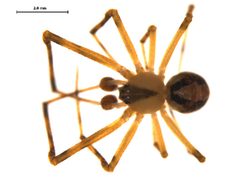
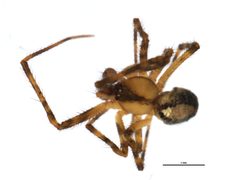
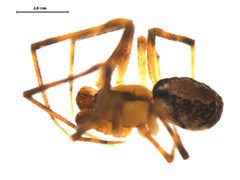
Pronunciation
How to pronounce Canalidion montanum: /kəˈnælɪˌdaɪən mɒnˈtænəm/
These audio files are automatically generated. While they are not always 100% accurate, they are a good starting point.
Identification
Canalidion montanum can be distinguished from other Theridiidae by diagnostic morphological features that warranted its generic separation: more teeth on the margin of the cheliceral furrow than typical Theridion , a basal depression of the cymbium, and a dorsally positioned embolus in males. These characters require microscopic examination of specimens.
Images
Distribution
Holarctic distribution: recorded from North America (including Alberta, Canada), Scandinavia, and Russia (Europe to Far East).
Behavior
Constructs tangle-webs typical of Theridiidae (irregular, three-dimensional cobwebs), though specific web architecture details for this are not documented.
Similar Taxa
- Theridion speciesFormerly classified within Theridion; distinguished by cheliceral tooth count, cymbium depression, and embolus position
- Other Theridiidae generaGeneric placement requires examination of male and cheliceral ; many small theridiids appear superficially similar