
Pachygnatha autumnalis
Marx, 1884
Big-eyed Thick-jawed Spider
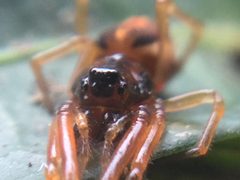
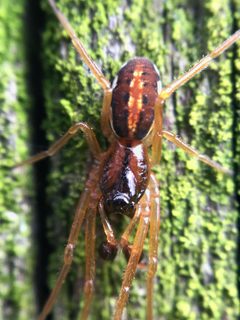
Pachygnatha autumnalis is a long-jawed orb-weaver spider in the Tetragnathidae, first described by Marx in 1884. The occurs across a broad North American and Caribbean range, including the United States, Canada, and Cuba. As a member of the Pachygnatha, it shares the characteristic robust, enlarged that distinguish this group from other tetragnathids. Observations suggest it is primarily active during autumn months, consistent with its specific epithet.

Pronunciation
How to pronounce Pachygnatha autumnalis: /ˌpækɪɡˈneɪθə ɔːtəˈmeɪlɪs/
These audio files are automatically generated. While they are not always 100% accurate, they are a good starting point.
Identification
Distinguished from other Pachygnatha by the combination of large, forward-directed and thickened, prominent . Males exhibit more pronounced jaw enlargement than females. The Pachygnatha differs from the related long-jawed orb-weaver genus Tetragnatha by its stockier body build and shorter, stouter chelicerae relative to body size.
Images
Distribution
United States, Canada, and Cuba. Specific state/province records include Vermont.
Seasonality
Active primarily during autumn months; the specific epithet 'autumnalis' reflects this seasonal association.
Similar Taxa
- Pachygnatha listeriCongeneric with similar enlarged and body plan; distinguished by subtle morphological differences in arrangement and cheliceral . P. listeri has been documented as a of nymphs (Ixodes ricinus), though this feeding has not been confirmed for P. autumnalis.
- Tetragnatha speciesRelated long-jawed orb-weavers in Tetragnathidae; differ in having more slender bodies, elongated , and typically longer, more delicate adapted for linear jaw extension rather than the robust crushing of Pachygnatha.