Loxosceles deserta
Gertsch, 1973
Desert Recluse
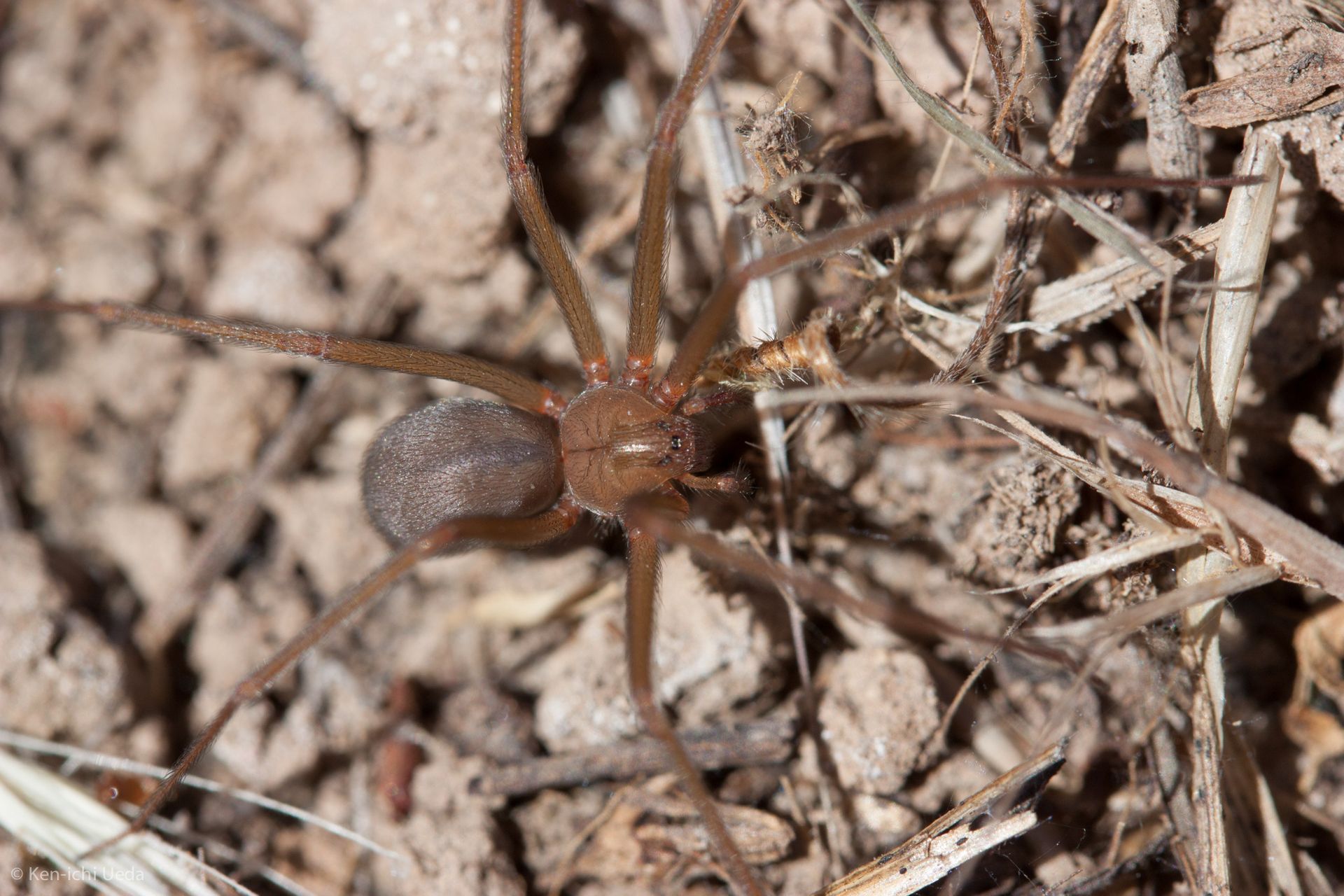
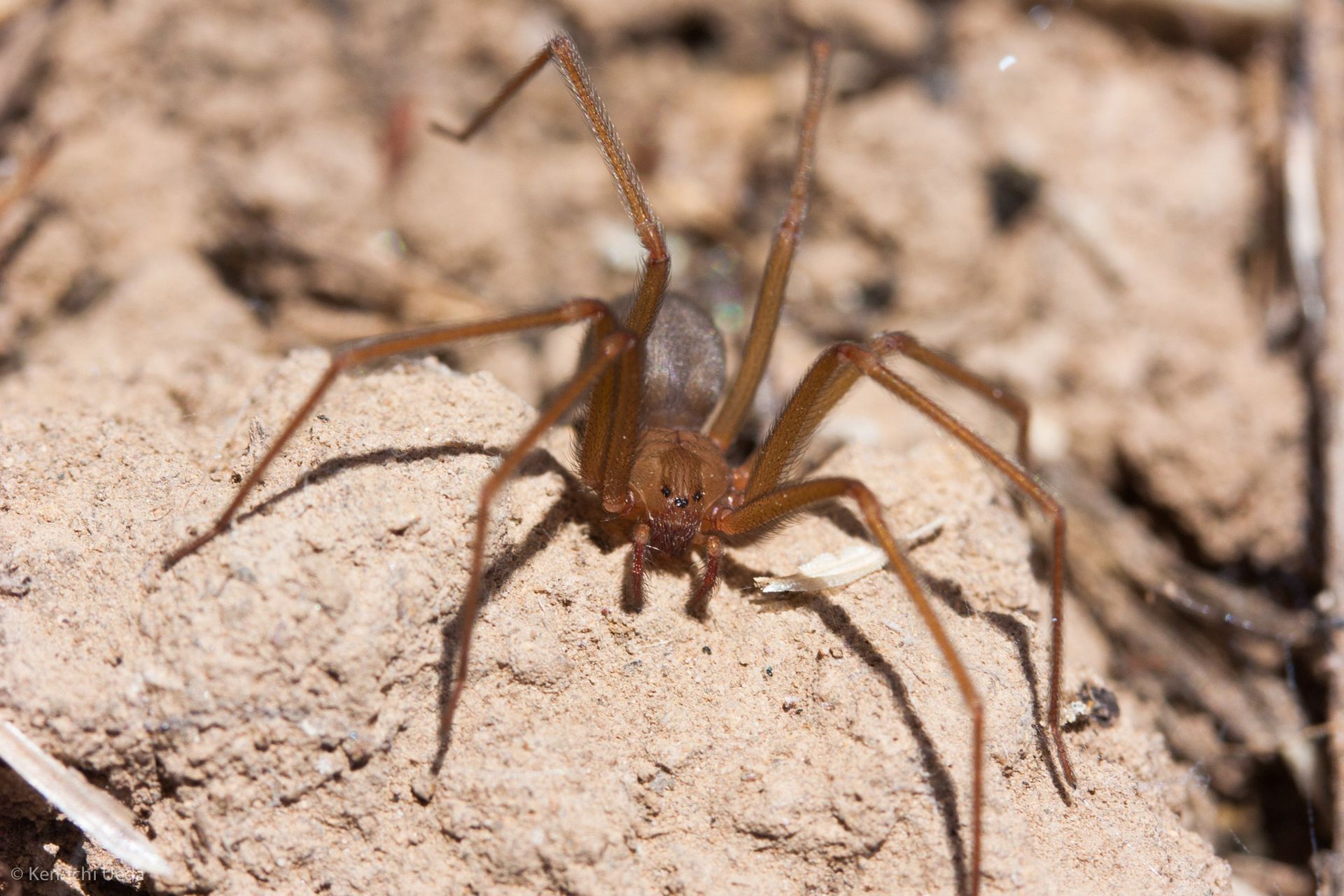
Loxosceles deserta, commonly known as the desert recluse, is a venomous brown spider in the Sicariidae. It is native to the southwestern United States and northwestern Mexico. The is frequently misidentified as the brown recluse (L. reclusa) or L. unicolor, despite occupying a geographically distinct range. Its venom contains cytotoxic compounds that can cause necrotic skin in humans, though bites are rare and typically defensive.
Pronunciation
How to pronounce Loxosceles deserta: //ˌlɒk.səˈsiː.liːz dɪˈzɜːr.tə//
These audio files are automatically generated. While they are not always 100% accurate, they are a good starting point.
Identification
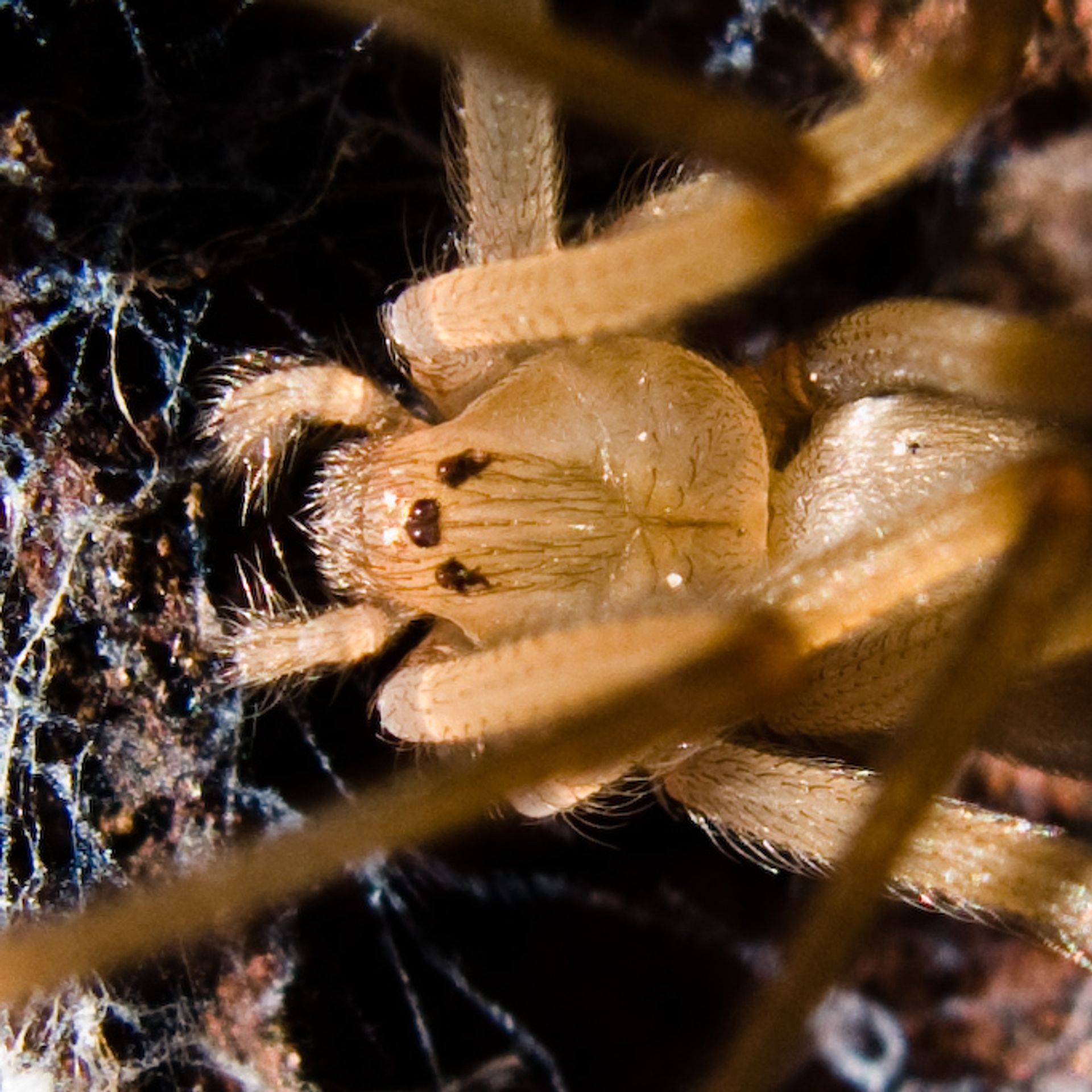
Definitive identification requires examination of the pattern: six eyes in three dyads (pairs) arranged in a triangle, with the pair closest together. This distinguishes all Loxosceles from the vast majority of spiders, which possess eight eyes. The faint or absent violin marking and geographic location in the southwestern deserts help separate L. deserta from L. reclusa. Accurate identification typically requires expert examination, as visual similarity to other brown spiders is high.
Images
Habitat
Arid and semi-arid desert environments. Particularly abundant in packrat (Neotoma) dens, where reach high densities. In human-altered environments, occurs only near native vegetation and avoids urban areas, green lawns, and heavily developed sites. Prefers dark, concealed spaces under rocks, debris, and within crevices.
Distribution
Southwestern United States and northwestern Mexico. In the U.S., documented from the eastern half of southern California, southern Nevada, western Arizona, throughout New Mexico (northern, central, eastern, and southwestern regions), and the southwestern corner of Utah.
Behavior
and reclusive; shelters in dark, confined spaces during daylight hours. Construct irregular, sheet-like webs in retreats. Tolerant of conspecifics, allowing dense to form in favorable microhabitats such as packrat dens. Bites are defensive, delivered only when the spider is trapped against skin or severely provoked.
Ecological Role
in desert ; particularly associated with packrat middens where it likely preys on insects and other small arthropods attracted to or inhabiting these structures.
Human Relevance
Medical significance due to cytotoxic venom that can cause —necrotic skin at bite sites. However, confirmed bites are uncommon, and the spider's reclusive nature and avoidance of human dwellings reduce encounter rates. Frequently subject to misidentification, leading to unwarranted fear and inappropriate pest control measures.
Similar Taxa
- Loxosceles reclusa (Brown Recluse)Overlaps in general appearance and venom effects; distinguished by geographic range (central and southeastern U.S., not southwestern deserts) and typically more prominent violin marking.
- Loxosceles unicolorSouth American with no geographic overlap; misidentification occurs due to superficial similarity in coloration and body form.
- Various brown spiders (e.g., Kukulcania hibernalis, Cithaeron praedonius)Similar brown coloration and body shape cause frequent misidentification by non-experts; all possess eight (vs. six in Loxosceles) and lack cytotoxic venom.
Misconceptions
Commonly misidentified as the brown recluse (L. reclusa) due to shared and general appearance, despite occupying non-overlapping geographic ranges. The presence of any brown spider with a vague dark marking is often erroneously assumed to indicate a recluse spider. Actual danger posed by L. deserta is frequently overstated; bites are rare and the avoids human contact.
More Details
Population Density
Exceptionally dense have been documented in packrat dens, suggesting this microhabitat is critical to the ' in desert environments.
Synanthropy
Unlike L. rufescens and occasionally L. reclusa, L. deserta shows minimal to human structures and is rarely found indoors except near native vegetation.
Sources and further reading
- BugGuide
- Wikipedia
- GBIF taxonomy match
- iNaturalist taxon
- NCBI Taxonomy
- Catalogue of Life
- New Species of Recluse Spider Named for Leonard Cohen
- Bug Eric: Brown Recluse
- New Study Busts Myths About Feared Recluse Spiders
- Brown Recluse: Pest Management Tips for the Spider That's Not as Common as You Think
- Bug Eric: City Nature Challenge 2024 Recap
- Bug Eric: Spider Sunday: Foreign Spider Now in Florida