
Pelegrina aeneola
(Curtis, 1892)
Coppered White-cheeked Jumping Spider
Pelegrina aeneola is a small jumping spider in the Salticidae, found in western North America. Females measure approximately 5.5 mm and males 5 mm, with pronounced in coloration. The occupies diverse vegetation types and has been documented feeding on insect . Despite being relatively well-observed, detailed natural history information remains limited.

Pronunciation
How to pronounce Pelegrina aeneola: //ˌpɛləˈɡriːnə ˌiːˈniːələ//
These audio files are automatically generated. While they are not always 100% accurate, they are a good starting point.
Identification
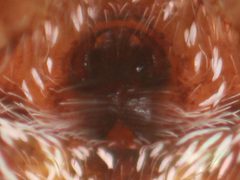
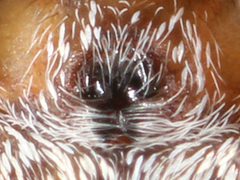
Distinguished from other Pelegrina by the specific pattern of white and brown (females) or black, brown, and white markings (males). The combination of small size, white cheek region in females, and the male's white-marked and separate it from such as P. proterva, P. galathea, and P. tillandsiae. Accurate identification may require examination of genitalic structures.
Images
Habitat
Occupies diverse vegetation types throughout western North America, including various herbaceous and shrubby plant . Specific microhabitat preferences within vegetation are not well documented.
Distribution
Western North America. Documented from Alberta and British Columbia in Canada, with records throughout the western United States. Not present in eastern North America.
Diet
Has been observed feeding on insect . Other prey items have not been documented.
Life Cycle
Developmental stages follow the typical salticid pattern of , spiderling, and , but specific details are not documented.
Behavior
As a jumping spider, likely exhibits characteristic salticid including visual hunting, jumping locomotion, and complex . Specific behaviors for this are not documented.
Ecological Role
Small , likely contributing to control of insect in herbaceous vegetation.
Similar Taxa
- Pelegrina protervaRelated in the same , distinguished by different color pattern and genitalic
- Pelegrina galatheaRelated with different abdominal pattern and preferences
- Pelegrina tillandsiaeRelated with more restricted distribution and different plant associations
- Pelegrina insignisRelated with distinct male and coloration
- Pelegrina flavipesRelated with yellow leg coloration in males
- Pelegrina exiguaRelated , generally smaller with different pattern elements
More Details
Taxonomic history
Originally described by Curtis in 1892. The has been subject to relatively little taxonomic revision compared to some .
Data limitations
Despite over 3,000 observations in iNaturalist, detailed natural history information remains sparse in the primary literature. Most observations are photographic records without accompanying behavioral or ecological notes.