
Pelegrina
Franganillo, 1930
Species Guides
15- Pelegrina aeneola(Coppered White-cheeked Jumping Spider)
- Pelegrina arizonensis
- Pelegrina balia
- Pelegrina clemata
- Pelegrina exigua
- Pelegrina flaviceps
- Pelegrina flavipes(Yellowleg Jumping Spider)
- Pelegrina galathea(Peppered Jumping Spider)
- Pelegrina helenae
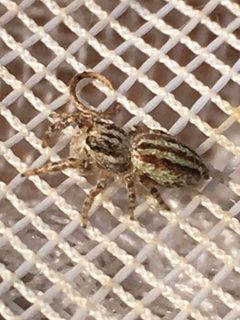
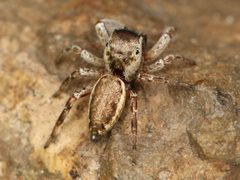
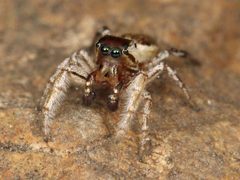
Pelegrina is a of jumping spiders in the Salticidae. The genus was established in 1930 by Spanish arachnologist Pelegrín Franganillo Balboa, who named it after himself. Many now placed in Pelegrina were previously classified in Metaphidippus and earlier in Dendryphantes. The genus is distributed throughout North America.
Pronunciation
How to pronounce Pelegrina: //ˌpɛləˈɡriːnə//
These audio files are automatically generated. While they are not always 100% accurate, they are a good starting point.
Identification
Members of Pelegrina can be distinguished from related jumping spider by their taxonomic placement, though specific diagnostic morphological features for the genus as a whole are not well-documented in available sources. Many were transferred from Metaphidippus, suggesting historical confusion with that genus. Identification to species level often requires examination of genitalic structures.
Images
Distribution
North America
Behavior
As jumping spiders (Salticidae), members of Pelegrina possess acute vision and exhibit characteristic jumping locomotion for hunting and navigation.
Similar Taxa
- MetaphidippusMany Pelegrina were previously classified in Metaphidippus, indicating historical taxonomic confusion and morphological similarity between these .
- DendryphantesEarlier taxonomic treatments placed now in Pelegrina within Dendryphantes, suggesting shared characteristics that led to reclassification.
More Details
Taxonomic history
The Pelegrina has undergone significant taxonomic revision. were transferred from Dendryphantes to Metaphidippus, and subsequently to Pelegrina when Franganillo established the genus in 1930.