
Paraphidippus aurantius
(Lucas, 1833)
emerald jumping spider, golden jumping spider
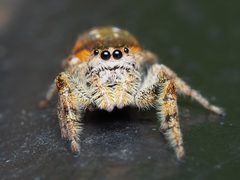
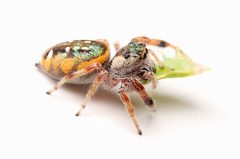
Paraphidippus aurantius is a of jumping spider in the Salticidae, commonly known as the emerald jumping spider or golden jumping spider. It is a solitary, active with a relatively large body size for a jumping spider. The species employs a distinctive hunting strategy involving venom injection followed by retreat and observation, enabling it to subdue prey substantially larger than itself. Its distribution spans from the United States through Panama and includes the Greater Antilles.
Pronunciation
How to pronounce Paraphidippus aurantius: //ˌpɛə.rəˈfɪ.dɪ.pəs ɔːˈɹæn.ti.əs//
These audio files are automatically generated. While they are not always 100% accurate, they are a good starting point.
Identification
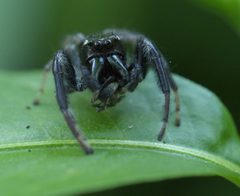
Distinguished from other jumping spiders by the combination of white lateral cephalothoracic stripes, white abdominal border, and central hairline with flanking white dots and lines. The green or black base coloration and relatively large size for the are additional field marks. Distinguished from by specific genitalic in males (dendryphantine palpus structure and position).
Images
Habitat
Occupies vegetation that provides shelter from rain and elevated vantage points. Frequently associated with yucca and rosette-forming plants, though specific plants vary by region. The large surface area of leaves in these plants appears to satisfy requirements for both protection and visual surveillance of surroundings.
Distribution
Occurs from the United States southward through Panama, including the Greater Antilles (Caribbean). Present in Middle America and North America broadly.
Diet
Active of both vertebrates and , including other spiders. Documented to capture and consume prey substantially larger than itself, including birds.
Behavior
Solitary hunter employing a cautious, multi-step strategy: initial bite to inject paralyzing venom, immediate retreat to maintain safe distance while venom takes effect, and return to immobilized prey. Extended feeding periods on large prey, with carcasses abandoned at kill sites. When threatened, capable of defensive biting.
Ecological Role
functioning as an active hunter in arboreal and vegetation-dwelling . Capable of suppressing of various arthropods and potentially small vertebrates through .
Human Relevance
Bites to humans have been documented when the spider is threatened. Venom does not cause paralysis in humans. Bite effects are minimal and comparable to mosquito bites, with typical including localized inflammation (approximately 1 cm diameter), itching (more common than pain), and complete healing within one month or less. One reported case involved delayed onset of itching at approximately one week post-bite.
Similar Taxa
- Phidippus speciesFormerly or alternatively classified within this ; shares dendryphantine male palpus structure, body size (~10 mm), and puffy hair-covered appearance. Distinguished by specific genitalic and color pattern details.
- Beata speciesShares -level characteristics including body size, male palpus structure, and puffy appearance. Distinguished by specific morphological features of the reproductive structures and coloration patterns.
More Details
Taxonomic note
The Wikipedia source contains taxonomic errors stating that Paraphidippus aurantius is located within the Phidippus and that Beata is also in this genus. This is incorrect: Paraphidippus and Phidippus are separate genera within Salticidae, as confirmed by GBIF, Catalogue of Life, and NCBI . The shared characteristics mentioned (body size, palpus structure, puffy appearance) represent or -level traits, not generic placement.