Habronattus viridipes
(Hentz, 1846)
Green-footed Jumping Spider
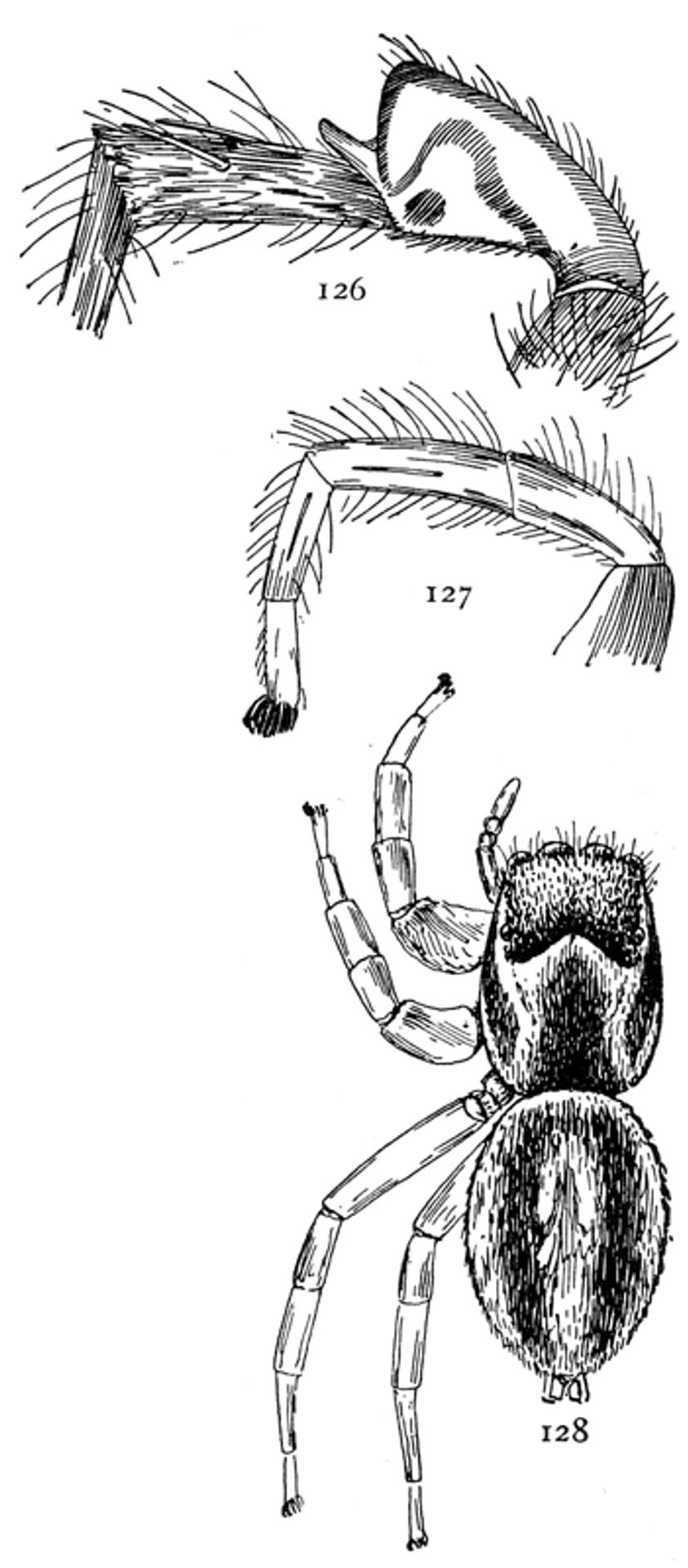
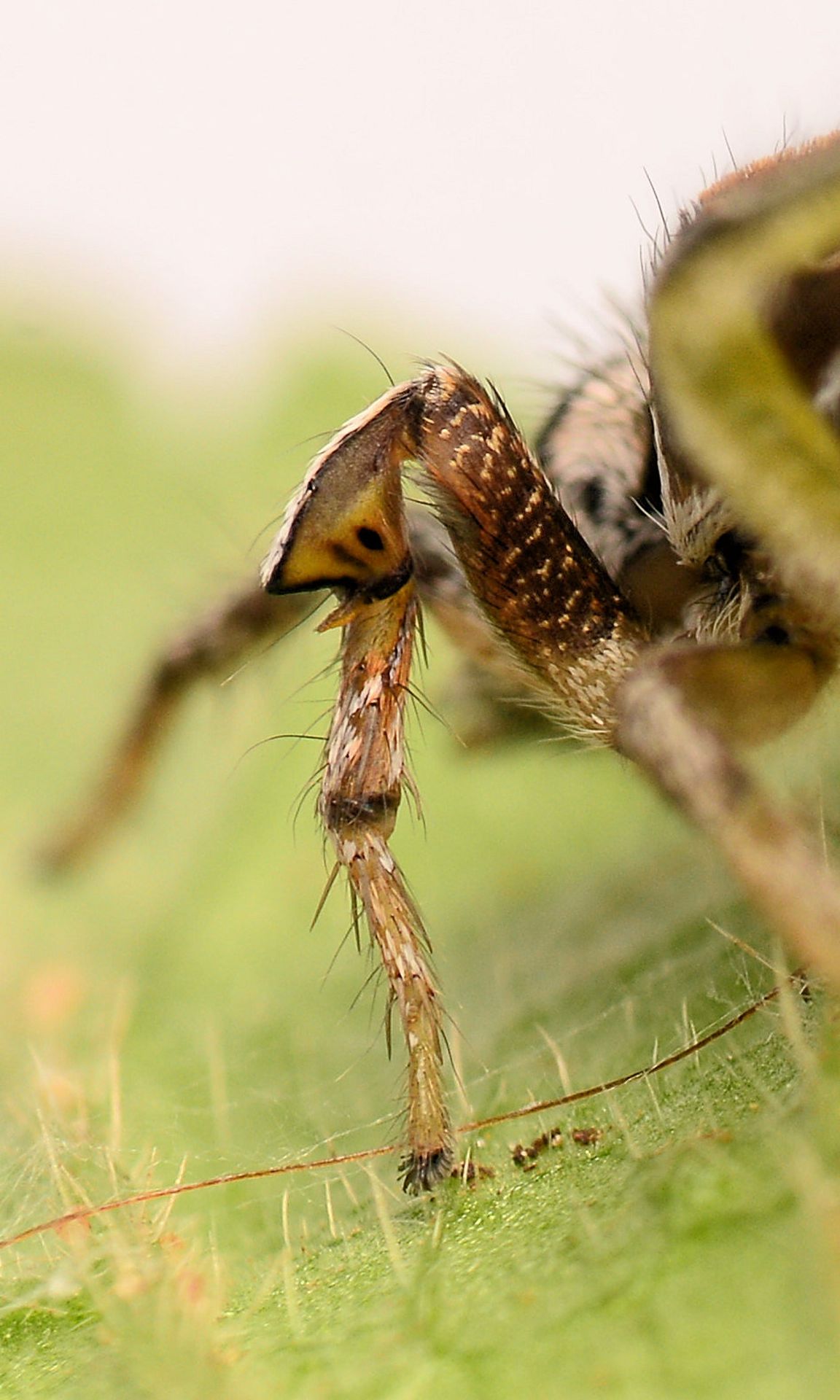
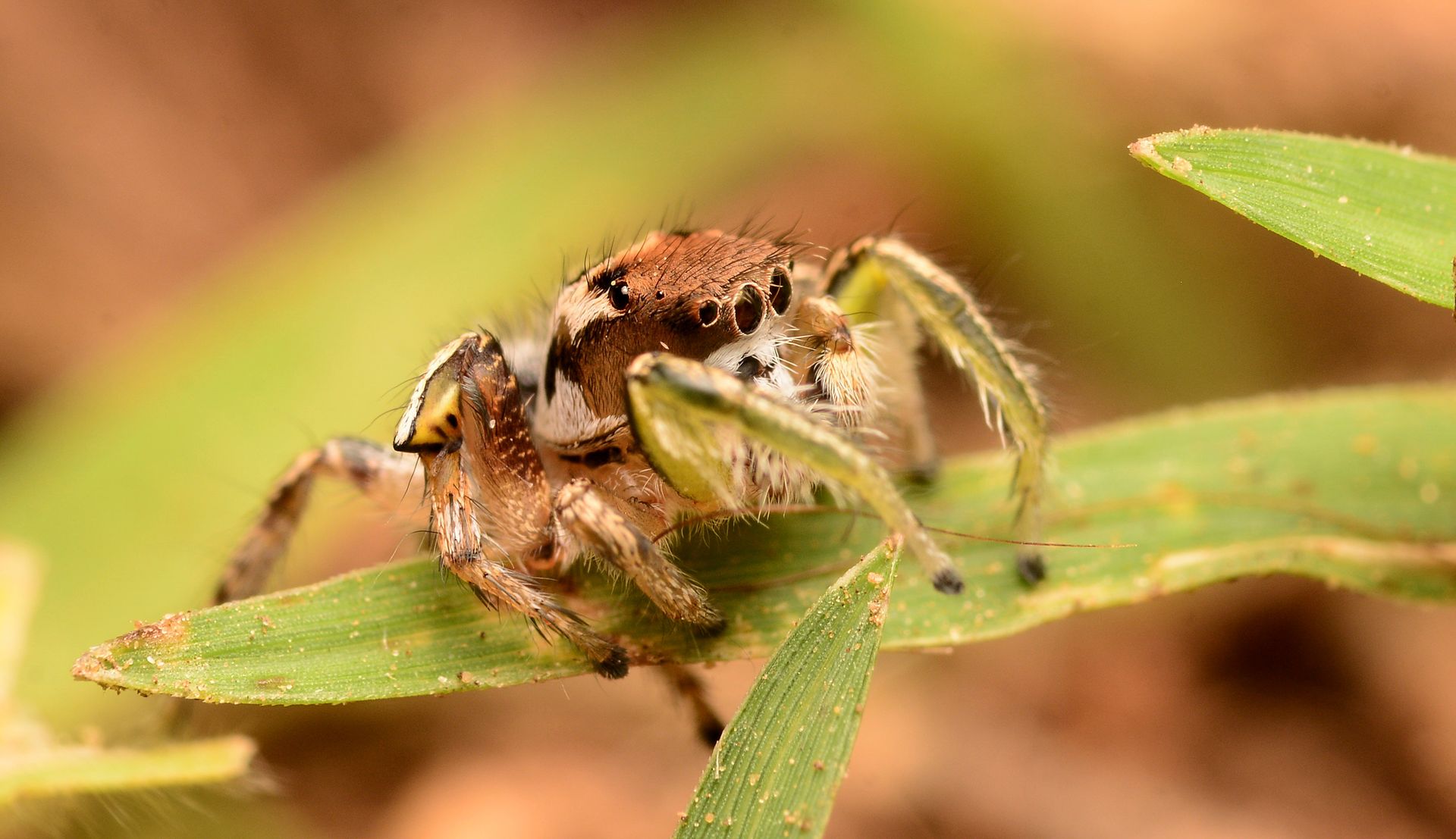
Habronattus viridipes is a small jumping spider in the Salticidae, distributed across eastern North America. Males are distinguished by bright green coloration on their front legs, which they use in visual . The exhibits complex multimodal mating involving both visual signals and vibratory communication. First described by Hentz in 1846, this species is part of a renowned for elaborate courtship rituals.
Pronunciation
How to pronounce Habronattus viridipes: //hæbroʊˈnætəs vɪˈrɪdɪˌpɛz//
These audio files are automatically generated. While they are not always 100% accurate, they are a good starting point.
Identification
The combination of small size (~5.5 mm), brownish-black body, and bright green front legs distinguishes males of this from other Habronattus and most other jumping spiders in its range. Females may be more difficult to identify and require examination of genital structures. Similar Habronattus species in the same geographic region may share leg modifications but differ in color pattern and specific leg ornamentation details.
Images
Habitat
Ground-dwelling in areas with scattered vegetation; found on stones and amid leaf litter in open including prairies, grasslands, and forest edges
Distribution
Eastern United States, west to Minnesota and Texas; southern Canada
Behavior
Males perform elaborate involving a 'dance' in which they present their green front legs to females. This visual display is accompanied by vibratory signals (drumming or tapping) transmitted through the substrate. The multimodal courtship is characteristic of the Habronattus, which has been described as having among the most elaborate courtship of any terrestrial .
Ecological Role
Predatory ; specific ecological role not documented
Similar Taxa
- Other Habronattus speciesShare -level traits including modified legs for and multimodal signaling, but differ in specific color patterns, leg ornamentation details, and geographic distribution
- Other small Salticidae in eastern North AmericaSimilar size and general body form, but lack the distinctive green front legs and specific courtship of H. viridipes
More Details
Taxonomic history
First described by Nicholas Marcellus Hentz in 1846, a pioneering American arachnologist.
Genus characteristics
Habronattus is a large of approximately 100 , most occurring in North America with some in the Neotropics. The genus is notable for extreme diversification of male , with species-specific combinations of visual and vibratory signals.