
Habronattus dossenus
Griswold, 1987
A small jumping spider in the Habronattus, native to Mexico and the southwestern United States. Males are renowned for producing complex multimodal combining visual signals with seismic (vibratory) signals generated by dorsoventral abdominal vibrations against the substrate. Signal efficacy varies dramatically by substrate type, with leaf litter providing the most favorable transmission environment compared to rocks or sand.
Pronunciation
How to pronounce Habronattus dossenus: /ˌhæbroʊˈnætəs ˈdɒsɛnəs/
These audio files are automatically generated. While they are not always 100% accurate, they are a good starting point.
Identification
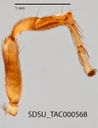
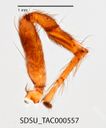
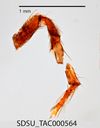
Distinguished from other Habronattus by specific morphological features described by Griswold (1987); males possess modified third legs typical of the used in visual . The species-specific identification relies on detailed examination of genitalia and other taxonomic characters.
Images
Habitat
Found on rocks, desert sand, and leaf litter. Leaf litter provides the most favorable environment for seismic signal transmission during courtship.
Distribution
Mexico and the southwestern United States.
Behavior
Males produce seismic courtship signals through dorsoventral abdominal vibrations against the substrate. These signals range from rapid phasic sounds less than 200 milliseconds long to extended phrases lasting multiple seconds. Males do not modify their courtship across different substrate types despite significant variation in signal transmission efficacy. Females detect these signals as substrate vibration velocity. The exhibits strong correlation between seismic signals and motion signals, suggesting integration of multiple communication modalities.
Similar Taxa
- Habronattus cuspidatusBoth are ground-dwelling Habronattus with modified third legs used in courtship; H. cuspidatus males possess a conspicuous spur on the 'knee' joint of the third leg.
- Habronattus calcaratusRelated with similar elaborate multimodal courtship involving seismic signals and visual displays using modified third legs.
Sources and further reading
- BugGuide
- Wikipedia
- GBIF taxonomy match
- iNaturalist taxon
- NCBI Taxonomy
- Catalogue of Life
- Bug Eric: What a Spider!
- Bug Eric: Spider Sunday: Another Jumper
- Bug Eric: A Case of Predator Mimicry in the Bee Fly Genus Epacmus? (Diptera: Bombyliidae)
- Bug Eric: Spider Sunday: "Arachtober" is B-a-a-a-a-a-ck!
- The effect of substrate on the efficacy of seismic courtship signal transmission in the jumping spider Habronattus dossenus (Araneae:Salticidae)