
Habronattus cockerelli
(Banks, 1901)
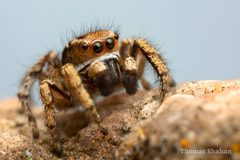
Habronattus cockerelli is a of jumping spider in the Salticidae, first described by Nathan Banks in 1901. The Habronattus is one of the largest genera of jumping spiders in North America, with approximately 100 species, most occurring in North America and the remainder in the neotropics. The highest diversity is found in the southwestern United States. Members of this genus are known for elaborate multimodal involving both visual signals through modified leg structures and acoustic signals produced by drumming or tapping on substrates.
Pronunciation
How to pronounce Habronattus cockerelli: /ˌhæbrəˈnætəs ˌkɒkəˈrɛlaɪ/
These audio files are automatically generated. While they are not always 100% accurate, they are a good starting point.
Images
Distribution
Recorded from the United States; occurs in North America. Based on -level patterns, likely found in southwestern U.S. where Habronattus diversity is concentrated, but specific locality data for this is limited.
Sources and further reading
- BugGuide
- GBIF taxonomy match
- iNaturalist taxon
- NCBI Taxonomy
- Catalogue of Life
- Bembicid Holdings | Entomology Research Museum
- UC Davis Researcher Targeting Zebra Chip: It's Not a Chip You Want | Bug Squad
- Bug Eric: What a Spider!
- Bug Eric: September 2012
- Bug Eric: A Case of Predator Mimicry in the Bee Fly Genus Epacmus? (Diptera: Bombyliidae)
- Psyllid Movements Revealed Via Gut Content Analysis