
Habronattus clypeatus
(Banks, 1895)
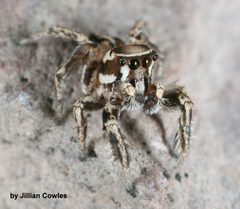
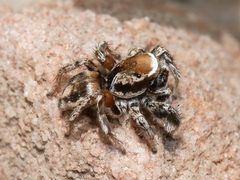
Habronattus clypeatus is a of jumping spider in the Salticidae. It belongs to the viridipes species group within the Habronattus. The species was first described by Banks in 1895. It is found in arid and semi-arid regions of the southwestern United States and northern Mexico.
Pronunciation
How to pronounce Habronattus clypeatus: /hæbroʊˈnætəs klɪˈpiːətəs/
These audio files are automatically generated. While they are not always 100% accurate, they are a good starting point.
Identification
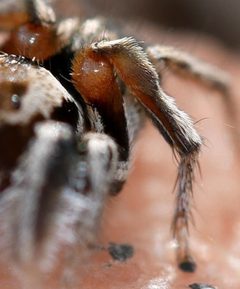
Members of the viridipes group, including H. clypeatus, are characterized by specific morphological features. Male Habronattus spiders typically possess modified third legs used in visual , often with prominent spurs or brushes. Accurate identification to species level requires examination of genitalia and comparison with related species in the viridipes group.
Images
Habitat
Occurs in arid and semi-arid environments including the Sonoran Desert. Found in areas with scattered vegetation, stones, and leaf litter where these ground-dwelling spiders actively hunt.
Distribution
United States and Mexico. Range extends from the southern Rocky Mountains to the northern Sierra Madre Occidental and Sonoran Desert.
Behavior
Like other Habronattus , males are expected to perform complex multimodal combining visual signals (leg movements, color displays) with acoustic vibrations (drumming on the substrate). These spiders are active hunters that rely on keen eyesight rather than web-building to capture prey.
Similar Taxa
- Habronattus viridipesBelongs to the same viridipes group; closely related and potentially sympatric in parts of the range
- Other Habronattus speciesApproximately 100 in the , many occurring in southwestern North America; species-level identification requires detailed examination
More Details
Species group classification
H. clypeatus is placed in the viridipes group, one of several species groups within the large Habronattus (~100 species). The viridipes group is characterized by specific morphological and behavioral traits.
Taxonomic history
First described by Nathan Banks in 1895. The has been documented in entomological collections and is recognized in major taxonomic databases including GBIF, Catalogue of Life, and NCBI.
Sources and further reading
- BugGuide
- Wikipedia
- GBIF taxonomy match
- iNaturalist taxon
- NCBI Taxonomy
- Catalogue of Life
- Bembicid Holdings | Entomology Research Museum
- Bug Eric: What a Spider!
- Bug Eric: Spider Sunday: Another Jumper
- Bug Eric: A Case of Predator Mimicry in the Bee Fly Genus Epacmus? (Diptera: Bombyliidae)
- Bug Eric: Spider Sunday: "Arachtober" is B-a-a-a-a-a-ck!