
Colonus puerperus
(Hentz, 1846)
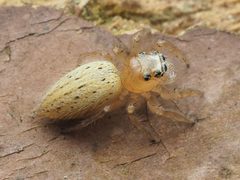
Colonus puerperus is a jumping spider found in the eastern United States, notable for its exceptional jumping ability. females measure 7–11 mm, while males are smaller at 5–7 mm. The species has been documented jumping up to 38 times its body length, with a measured maximum horizontal jump of 23 cm for a 6.2 mm male. It inhabits grassy areas and is active during warmer months.


Pronunciation
How to pronounce Colonus puerperus: /koʊˈloʊnəs pjuˈɜrpərəs/
These audio files are automatically generated. While they are not always 100% accurate, they are a good starting point.
Identification
Smaller than many other jumping spiders in the Colonus, with males 5–7 mm and females 7–11 mm. Distinguished from similar by size and documented jumping performance. Specific coloration and pattern details not provided in sources.
Images
Habitat
Grassy areas, including prairies and open fields.
Distribution
Eastern United States: Gulf Coast from Florida to Texas, northward to Kansas, Illinois, and Pennsylvania.
Seasonality
Warmer months of the year; active during spring through fall.
Behavior
Exceptional jumping ability has been quantified: a 6.2 mm male achieved a horizontal jump of 23 cm, representing approximately 38 times its body length. This places C. puerperus among the furthest-jumping jumping spider documented.
More Details
Etymology
The name derives from Latin 'puerperus,' meaning 'just having born a child' (from puer, child, and pario, give birth). The reason for this specific epithet choice is not explained in available sources.
Research significance
The documented jumping performance of this contributes to understanding the biomechanical limits of salticid locomotion.