Philodromus rufus pacificus
Banks, 1898
Pacific running crab spider
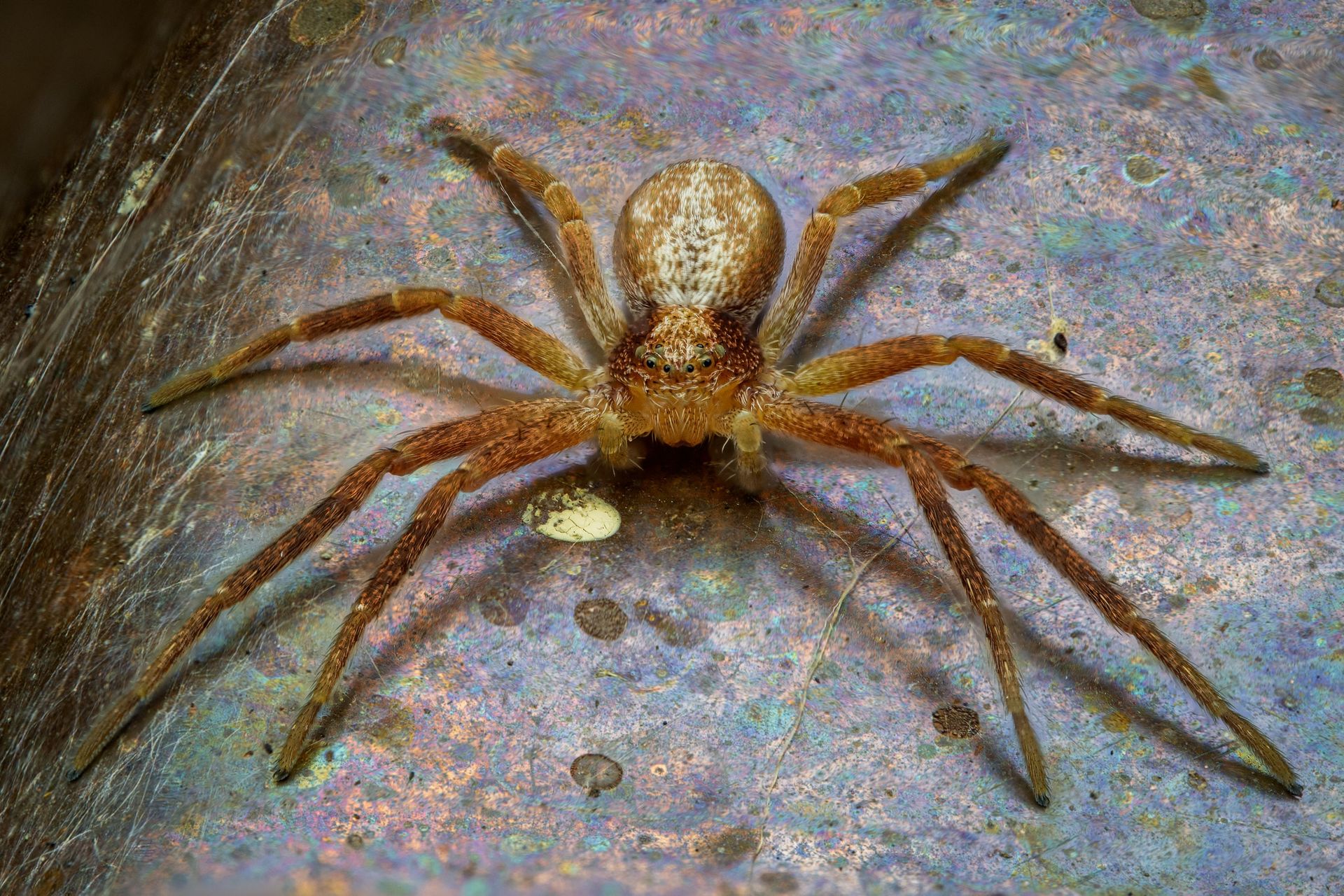
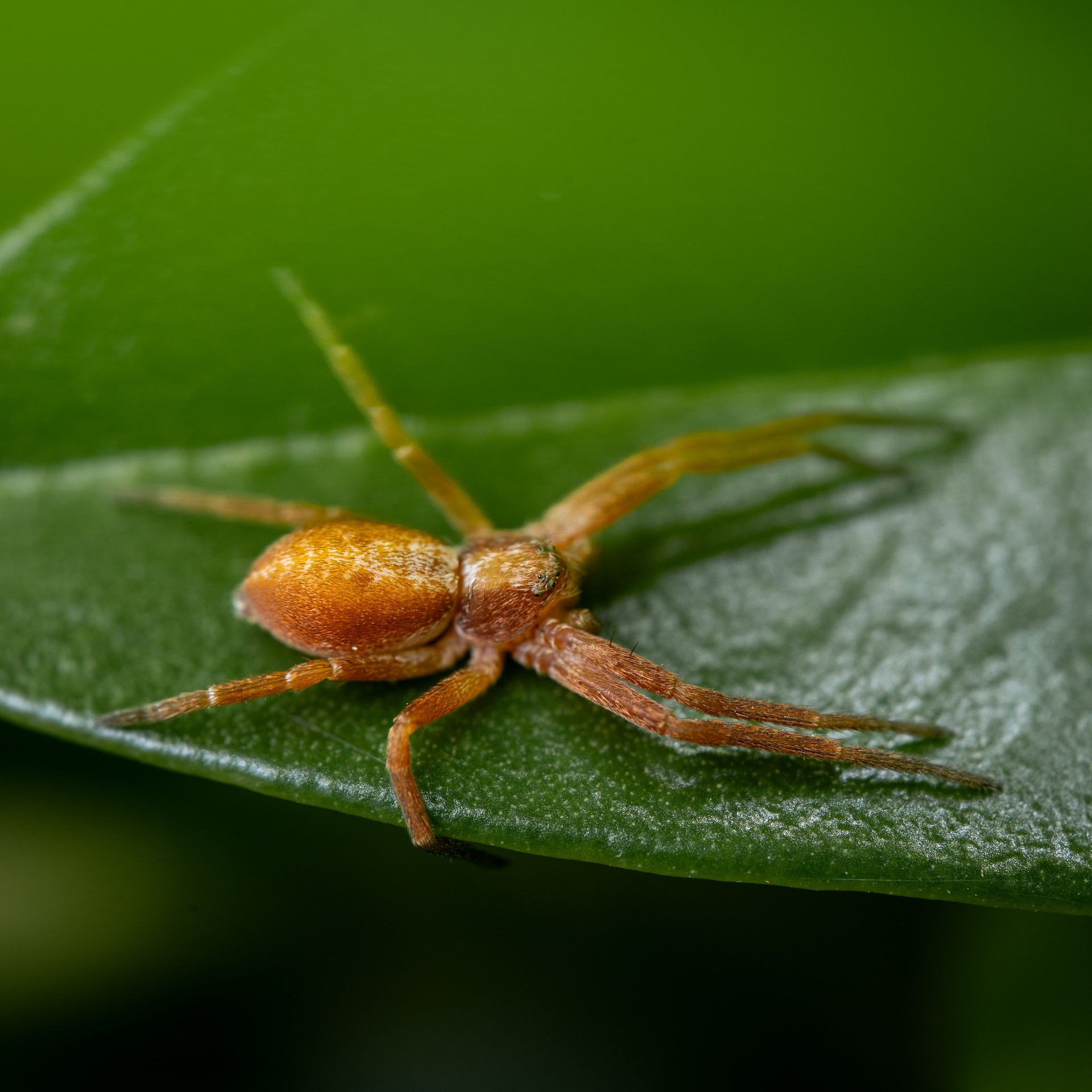
Philodromus rufus pacificus is a of running crab spider to the Pacific Northwest of the United States. It belongs to the Philodromidae, a group known for their laterigrade leg orientation that permits sideways movement. The subspecies is distinguished from the nominate form by specific morphological traits. Running crab spiders are sit-and-wait that do not build webs for prey capture.
Pronunciation
How to pronounce Philodromus rufus pacificus: /ˌfɪl.əˈdroʊ.məs ˈru.fəs pəˈsɪ.fɪ.kəs/
These audio files are automatically generated. While they are not always 100% accurate, they are a good starting point.
Identification
Distinguished from Philodromus rufus by its light grey (as opposed to darker eye coloration in the nominate ), bullet-shaped , and more laterally extended leg posture. The Pacific Northwest distribution provides geographic separation from other P. rufus . Examination of eye coloration and abdominal shape is necessary for confident identification.
Images
Appearance
Characterized by completely light grey , a bullet-shaped , and a more spread-out leg structure than the parent Philodromus rufus. The body form is typical of philodromid spiders with a somewhat flattened profile adapted for moving through vegetation.
Habitat
Specific preferences are not documented in available sources. As a member of Philodromidae, it likely occurs in vegetation where its sideways-running locomotion provides advantage.
Distribution
to the Pacific Northwest of the United States; restricted to the west coast of North America. The has been documented in this region based on collection records and observational data.
Behavior
As a running crab spider ( Philodromidae), it exhibits laterigrade leg orientation permitting sideways movement. Members of this family are sit-and-wait that do not construct capture webs, instead actively pursuing or ambushing prey on vegetation surfaces.
Similar Taxa
- Philodromus rufus (nominate subspecies)Overlaps in general but differs in coloration (not light grey), abdominal shape (less distinctly bullet-shaped), and leg structure (less spread out). Geographic separation with nominate occurring outside the Pacific Northwest.
More Details
Taxonomic Note
The was described by Banks in 1898. GBIF records show distribution data for the broader including regions outside the Pacific Northwest, but these likely represent the nominate subspecies or other related rather than P. r. pacificus specifically.
Sources and further reading
- BugGuide
- Wikipedia
- GBIF taxonomy match
- iNaturalist taxon
- Catalogue of Life
- 4th International Pollinator Conference Begins | Bug Squad
- Be thankful for bees this Thanksgiving: Blue orchard mason bees, Rufus-backed cellophane bee, squash bees, perplexing bumble bees, and honey bees — Bug of the Week
- Spring Conditions Predict Following Year's Tick Activity in Northern California
- Cold-Season Temperature and Rainfall Drive Climate Suitability for Ticks in California
- CDC Study Shares County Maps of 7 Diseases Spread by Blacklegged Ticks
- Mapping Lyme: CDC Reveals Distribution of Lyme Disease-Causing Bacteria by County