
Apollophanes
O. Pickard-Cambridge, 1898
running crab spiders
Species Guides
3Apollophanes is a of running crab spiders ( Philodromidae) with a broad geographic distribution spanning Asia, North America, Central America, and South America. The genus was established by Octavius Pickard-Cambridge in 1898 and contains characterized by distinctive morphological features including a moderately low prosoma with yellow to orange-brown coloration and dark lateral spots, long slender speckled legs, and a conspicuous mark on the opisthosoma. The genus has been recorded from ranging from temperate regions to tropical Atlantic rainforest.
Pronunciation
How to pronounce Apollophanes: /ˌæpəˈlɒfəˌniːz/
These audio files are automatically generated. While they are not always 100% accurate, they are a good starting point.
Identification
Distinguished from Cleocnemis by presence of two tibial ( and retrolateral) and long copulatory duct slits reaching margin of epigastric furrow. Differs from Thanatus by macrosetae on prolateral region of . Separated from Tibellus by leg proportions: leg IV longer than leg I in Tibellus, whereas leg I usually longer than IV in Apollophanes males.
Images
Appearance
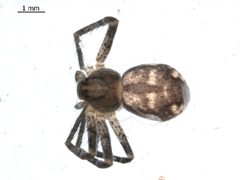
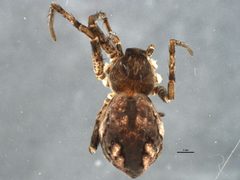
Moderately low prosoma, yellow to orange-brown in color with black or brown spots on lateral margins. Opisthosoma bears a conspicuous mark, dark longitudinal spots on lateral margins, and pale region with purple spots. Legs long, slender, and speckled with dark spots.
Habitat
Atlantic rainforest in Brazil; other recorded include temperate and tropical forests across the range.
Distribution
Asia; North America; Central America; South America (Galapagos Islands, Atlantic rainforest in Brazil).
Similar Taxa
- CleocnemisShares prosoma shape and coloration patterns, but differs in male genitalia: Cleocnemis has shorter copulatory duct openings in central region of septum versus long slits reaching margin in Apollophanes
- ThanatusSimilar leg spotting and slender build, but Apollophanes has macrosetae on prolateral absent in Thanatus
- TibellusComparable overall , but Tibellus has leg IV longer than leg I versus leg I longer than IV in Apollophanes males
More Details
Taxonomic history
The was first described by Octavius Pickard-Cambridge in 1898. New from the Galapagos Islands (2013) and Atlantic rainforest have extended the known range.
Male diagnostic characters
Presence of two tibial ( and retrolateral) on male serves as key diagnostic feature separating Apollophanes from related .