
Oedothorax
Bertkau, 1883
dwarf spiders
Species Guides
1- Oedothorax trilobatus(Tricorn Dwarf Weaver)
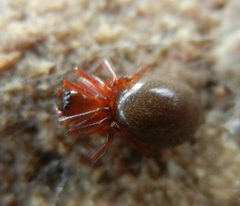
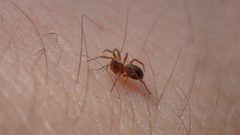
Oedothorax is a of dwarf spiders in the Linyphiidae, Erigoninae, first described in 1883. The genus comprises approximately 39 distributed across Europe, Asia, North America, and Africa. These spiders are characterized by their small size, typically measuring only about 2 mm in total body length. Males of certain species, such as O. trilobatus, exhibit distinctive cephalothoracic modifications including tumor-like swellings or horn-like extensions. The genus has gained scientific attention due to O. gibbosus hosting up to five different bacterial endosymbionts simultaneously, representing a unique system for studying -endosymbiont interactions.

Pronunciation
How to pronounce Oedothorax: /ˌiːdoʊˈθɔːræks/
These audio files are automatically generated. While they are not always 100% accurate, they are a good starting point.
Identification
Oedothorax are distinguished from other linyphiid primarily by genitalic characters, requiring examination of mature specimens. Males of O. trilobatus can be recognized by three tumor-like swellings on the that give the species its name. The extremely small body size (approximately 2 mm) places these spiders among the smallest linyphiids. Species-level identification typically requires microscopic examination of external genitalia; specimens and spiderlings generally cannot be determined beyond level.
Images
Habitat
Epigeal (ground-dwelling); found in terrestrial environments including sown weed strips in cereal fields, which serve as sites. of O. gibbosus have been sampled from six locations in Belgium: Damvallei, Sevendonck, Pollismolen, Honegem, Overmeren, and Walenbos.
Distribution
Widespread across the Northern Hemisphere: Europe (including Azores, Spain, France, Italy, Switzerland, Albania, Greece), Russia (Europe to Siberia), Turkey, Caucasus, Kazakhstan, Iran, Central Asia, China, Japan, India, Nepal, Myanmar, Malaysia (Borneo), Indonesia (Java), and North America (USA including Alaska, Canada). Also recorded from North Africa (Morocco, Algeria, Tunisia, Ethiopia).
Host Associations
- Wolbachia (two strains: wOegibbosus-W744×776A and wOegibbosus-W744×776B) - endosymbiontAlphaproteobacteria; reproductive manipulator
- 'Candidatus Tisiphia' - endosymbiontRickettsiaceae, Alphaproteobacteria; formerly Torix group
- Cardinium - endosymbiontBacteroidetes; reproductive manipulator
- Rhabdochlamydia - endosymbiontChlamydiae; 'Candidatus Rhabdochlamydia oedothoracis'
Life Cycle
Endosymbionts are maternally transmitted. Spiders progress through stages including spiderlings and juveniles before reaching maturity; are one removed from adulthood. Mature specimens required for -level identification.
Behavior
Males of O. trilobatus exhibit distinctive cephalothoracic modifications. Co- with multiple bacterial endosymbionts occurs frequently in individuals of O. gibbosus, with up to five different endosymbiont types simultaneously present. Endosymbionts show heterogeneous distribution among spider .
Human Relevance
O. apicatus has been studied as a model organism for bioavailability research, specifically regarding deltamethrin uptake from different substrates. Sown weed strips in cereal fields serve as sites and "source" for O. apicatus, indicating potential role in agricultural .
Similar Taxa
- WalckenaeriaBoth are dwarf spiders in Erigoninae with extremely small body size; males of W. communis can have horn-like cephalothoracic extensions similar to some Oedothorax , requiring genitalic examination for definitive separation.
- ErigoneBoth are epigeal erigonine spiders found in similar agricultural such as cereal fields; similar size and ground-dwelling habit necessitate detailed morphological examination for differentiation.
Sources and further reading
- BugGuide
- Wikipedia
- GBIF taxonomy match
- iNaturalist taxon
- NCBI Taxonomy
- Catalogue of Life
- Bug Eric: I See Dead Spiders
- Bug Eric: 2009
- One to host them all: genomics of the diverse bacterial endosymbionts of the spider Oedothorax gibbosus
- Substrate‐Dependent Bioavailability of Deltamethrin for the Epigeal Spider Oedothorax apicatus (Blackwall) (Aranaea, Erigonidae)
- A novel widespread MITE element in the repeat-rich genome of the Cardinium endosymbiont of the spider Oedothorax gibbosus
- One to host them all: genomics of the diverse bacterial endosymbionts of the spider Oedothorax gibbosus
- Sown weed strips in cereal fields: overwintering site and “source” habitat for Oedothorax apicatus (Blackwall) and Erigone atra (Blackwall) (Araneae: Erigonidae)
- A Novel Widespread MITE Element in the Repeat-Rich Genome of the Cardinium Endosymbiont of the Spider Oedothorax gibbosus