
Walckenaeria
Blackwall, 1833
dwarf spiders
Species Guides
17- Walckenaeria auranticeps
- Walckenaeria bifida
- Walckenaeria carolina
- Walckenaeria castanea
- Walckenaeria columbia(dwarf spider)
- Walckenaeria communis(dwarf spider)
- Walckenaeria cornuella(dwarf spider)
- Walckenaeria digitata(dwarf spider)
- Walckenaeria directa(dwarf spider)
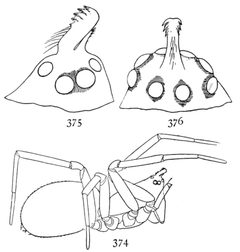
Walckenaeria is a of dwarf spiders in the Linyphiidae, first described by John Blackwall in 1833. The genus contains approximately 195-198 as of 2020, distributed across multiple continents. Males in this genus exhibit distinctive , with some species having eyes elevated on mounds, turrets, or stalks that can exceed the height of the . Walckenaeria is a senior synonym of several previously described genera including Paragonatium, Wideria, and Cornicularia.
Pronunciation
How to pronounce Walckenaeria: //wɔlkɛnˈiːriə//
These audio files are automatically generated. While they are not always 100% accurate, they are a good starting point.
Identification
Distinguished from other Linyphiidae primarily by male . The presence of eyes on elevated stalks, turrets, or mounds is diagnostic for this genus. -level identification requires examination of male copulatory organs (palps) and female epigynal structures. Some species were previously placed in other genera and transferred to Walckenaeria based on morphological revisions.
Images
Appearance
Small-bodied spiders typical of the Linyphiidae . Males possess highly modified arrangements, with eyes positioned on elevated structures including mounds, turrets, or elongated stalks. In extreme cases, multiple eyes are borne on a stalk taller than the itself. General body form consistent with dwarf spiders: compact and relatively long, slender legs.
Habitat
varies by . Documented occurrences include xerothermic habitats and aeolian sand dunes in Central Europe. Specific habitat associations for most species are poorly documented in available sources.
Distribution
Widespread distribution with records from Europe (including Slovakia, Austria, Germany, Switzerland, England), North America, and Asia. The has been recorded in the Pannonian Basin and across multiple biogeographic regions. Individual show varied distributions: for example, W. stylifrons ranges from Eastern England to Eastern Germany in the north, and from the Iberian Peninsula to Crimea and Cyprus in the south.
Seasonality
varies by . Some species, such as W. stylifrons, have adults present during winter months, which may contribute to under-detection in standard surveys focused on growing seasons.
Human Relevance
One , Walckenaeria pinocchio, was named after the Disney character Pinocchio, illustrating the use of culturally significant names in to generate public interest in biodiversity.
Similar Taxa
- Other Linyphiidae generaWalckenaeria is distinguished by the unique male stalks and turrets not found in most related ; other dwarf spiders lack these elevated eye structures
More Details
Taxonomic History
The has undergone extensive revision, with numerous transferred to other genera including Argyrodes, Shaanxinus, Paikiniana, Nasoona, Dactylopisthes, Oia, Baryphymula, Baryphyma, Ainerigone, Okhotigone, Tennesseellum, Scylaceus, and Neomaso. Several species remain as nomina dubia due to insufficient original descriptions.
Species Diversity
As of September 2020, Walckenaeria contained 195 and two . The is among the more species-rich genera within Linyphiidae.