
Nigma
Lehtinen, 1967
Species Guides
1Nigma is a of cribellate araneomorph spiders in the Dictynidae, established by Pekka T. Lehtinen in 1967. The genus contains approximately fourteen distributed across Eurasia, North America, and Northern Africa. Members are generally small, with N. walckenaeri being among the largest in the family at up to 5 mm body length. The genus is part of the marronoid spider group, which has been subject to recent phylogenetic revision using genetic data from museum specimens.
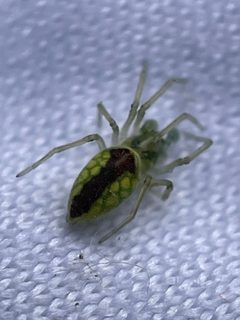
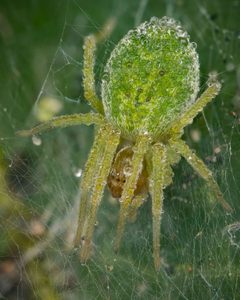
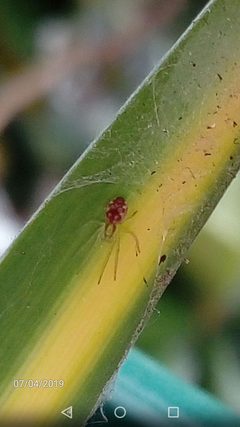
Pronunciation
How to pronounce Nigma: /ˈniɡ.ma/
These audio files are automatically generated. While they are not always 100% accurate, they are a good starting point.
Identification
Distinguished from other dictynid by translucent green coloration combined with cribellate silk structures. N. walckenaeri identifiable by larger size (up to 5 mm) within . -level identification requires examination of genitalia and geographic location. Similar green-colored spiders in other families lack cribellate silk.
Images
Appearance
Translucent green body coloration, sometimes with red or black abdominal markings. N. walckenaeri reaches up to 5 mm in length, making it one of the largest dictynid spiders. Prosoma shape shows subtle in at least some . Cribellate silk-producing structures present.
Habitat
Found on upper surfaces of leaves, particularly of ornamental and agricultural trees such as Ficus nitida and Dalbergia sissoo. Constructs webs in urban and agricultural settings. Specific microhabitat preferences vary by ; some occupy riverine environments separated by natural barriers.
Distribution
Eurasia, North America, and Northern Africa. Documented from Europe (including Portugal, Spain, France), Caucasus, Iran, Turkey, North Africa (Egypt, Algeria, Senegal), East Africa, India, China, and USA. Riverine in Egypt (Sohag Governorate) occur on opposite banks of the Nile River.
Host Associations
- Ficus nitida - Ornamental tree; web construction on leaves
- Dalbergia sissoo - Agricultural tree; web construction on leaves
Behavior
Constructs irregular, finely meshed webs on upper leaf surfaces. One leaf may hold one to several individuals. Females and males do not occupy the same leaf simultaneously. Web architecture distinctive within .
Ecological Role
of small insects; potential agent for agricultural pests. Preys on pest insects in ornamental and agricultural tree .
Human Relevance
Subject of geometric morphometric studies examining shape variation and . Used in demographic studies under laboratory conditions. Featured in phylogenetic studies of marronoid spider evolution utilizing museum specimens.
Similar Taxa
- Other Dictynidae generaNigma distinguished by translucent green coloration; most dictynids lack this coloration
- Green-colored spiders in other families (e.g., some Araneidae, Thomisidae)Nigma has cribellate silk structures absent in these ; web architecture also differs
More Details
Phylogenetic significance
Nigma is part of the marronoid spider group, which has undergone recent taxonomic revision using genetic data from museum specimens, clarifying previously uncertain evolutionary relationships
Sexual dimorphism
Geometric morphometric studies of N. conducens demonstrate significant but subtle in prosoma shape, likely due to or adaptive divergence to different microhabitats
Sources and further reading
- BugGuide
- Wikipedia
- GBIF taxonomy match
- iNaturalist taxon
- NCBI Taxonomy
- Catalogue of Life
- marronoid phylogram - Entomology Today
- three marronoid spiders - Entomology Today
- Exploring shape diversity and sexual dimorphism in two populations of Nigma conducens through geometric morphometrics
- Biology and life table analysis of Nigma conducens (Arachnida: Araneae) fed on first instar larvae of Spodoptera frugiperda under laboratory conditions