
Argenna
Thorell, 1870
Species Guides
1- Argenna obesa(Plump Dictynid Spider)
Argenna is a of cribellate araneomorph spiders first described by Tamerlan Thorell in 1870. The genus is characterized by the presence of a cribellum, a silk-producing structure used to create woolly, non-sticky capture threads. As of October 2025, the genus includes six . The placement has been subject to taxonomic revision, with sources variously placing it in Argyronetidae or Dictynidae.
Pronunciation
How to pronounce Argenna: //ɑːrˈdʒɛnə//
These audio files are automatically generated. While they are not always 100% accurate, they are a good starting point.
Identification
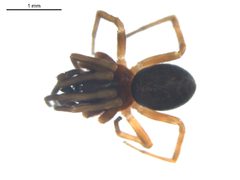
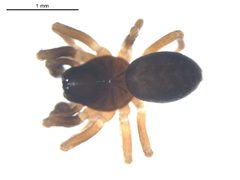
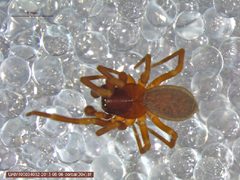
Argenna possess a cribellum, a flat, plate-like spinning organ located to the , which distinguishes them from ecribellate spiders. The cribellum produces extremely fine silk strands that are combed into woolly, entangling threads using the calamistrum, a specialized row of bristles on the of the fourth leg. Members of this are generally small spiders with compact bodies. Distinguishing Argenna from other cribellate genera requires examination of genitalic structures and detailed somatic .
Images
Distribution
Documented distribution records exist for Denmark (DK), Norway (NO), and Sweden (SE).
Similar Taxa
- DictynaAlso cribellate spiders in Dictynidae; distinguished by genitalic and somatic characters
- LathysSmall cribellate spiders with similar body plans; separation requires detailed morphological examination
More Details
Family placement
Sources conflict regarding placement: Wikipedia and Catalogue of Life place Argenna in Argyronetidae, while iNaturalist, GBIF, and NCBI place it in Dictynidae. This reflects ongoing taxonomic revision in spider .
Cribellate silk
The cribellate silk production method is considered evolutionarily ancient and has been lost independently in multiple spider lineages. The presence of this trait in Argenna represents a retained plesiomorphic condition.