Deinopis spinosa
Marx, 1889
ogre-faced spider, net-casting spider, gladiator spider
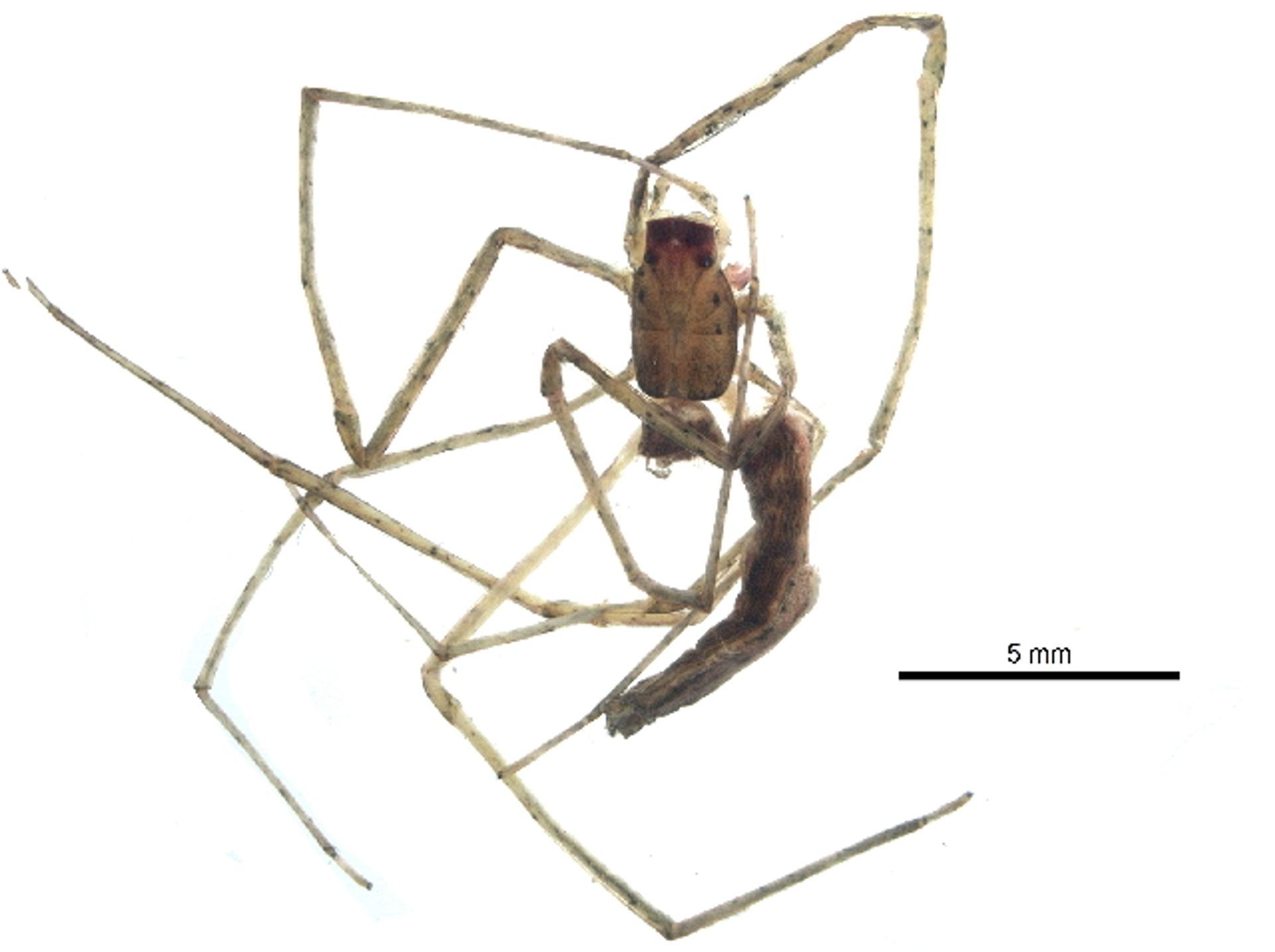
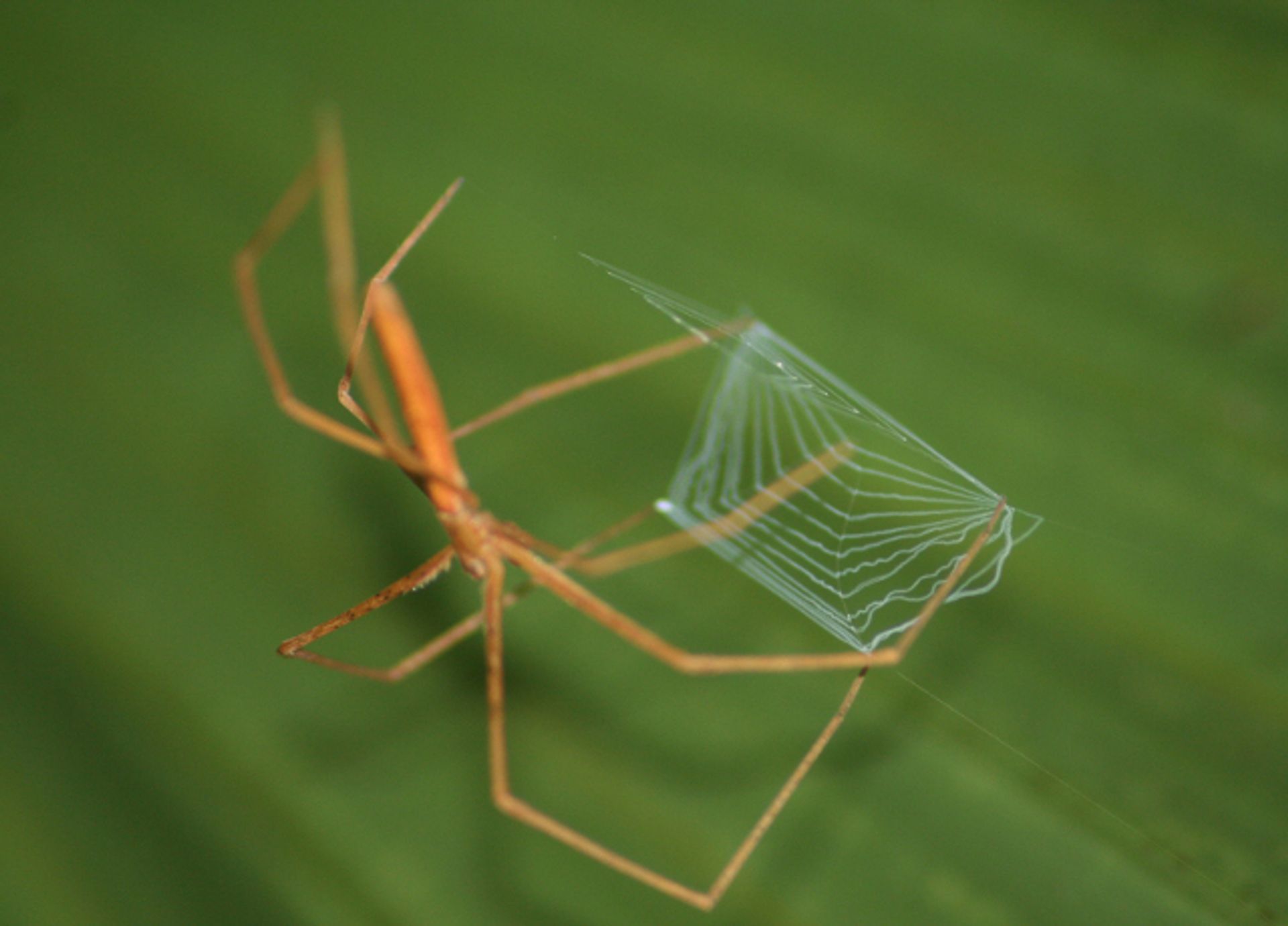
Deinopis spinosa is a spider in the Deinopidae, notable for its unique net-casting hunting technique. The spider holds a small rectangular sticky web stretched between its front legs and lunges forward to capture prey, or uses a backward striking motion for airborne prey. It possesses extremely enlarged adapted for night vision and uses both visual and auditory cues to detect prey. During daylight hours, the spider remains immobile and camouflaged on vegetation.
Pronunciation
How to pronounce Deinopis spinosa: //daɪˈnoʊpɪs spaɪˈnoʊsə//
These audio files are automatically generated. While they are not always 100% accurate, they are a good starting point.
Identification
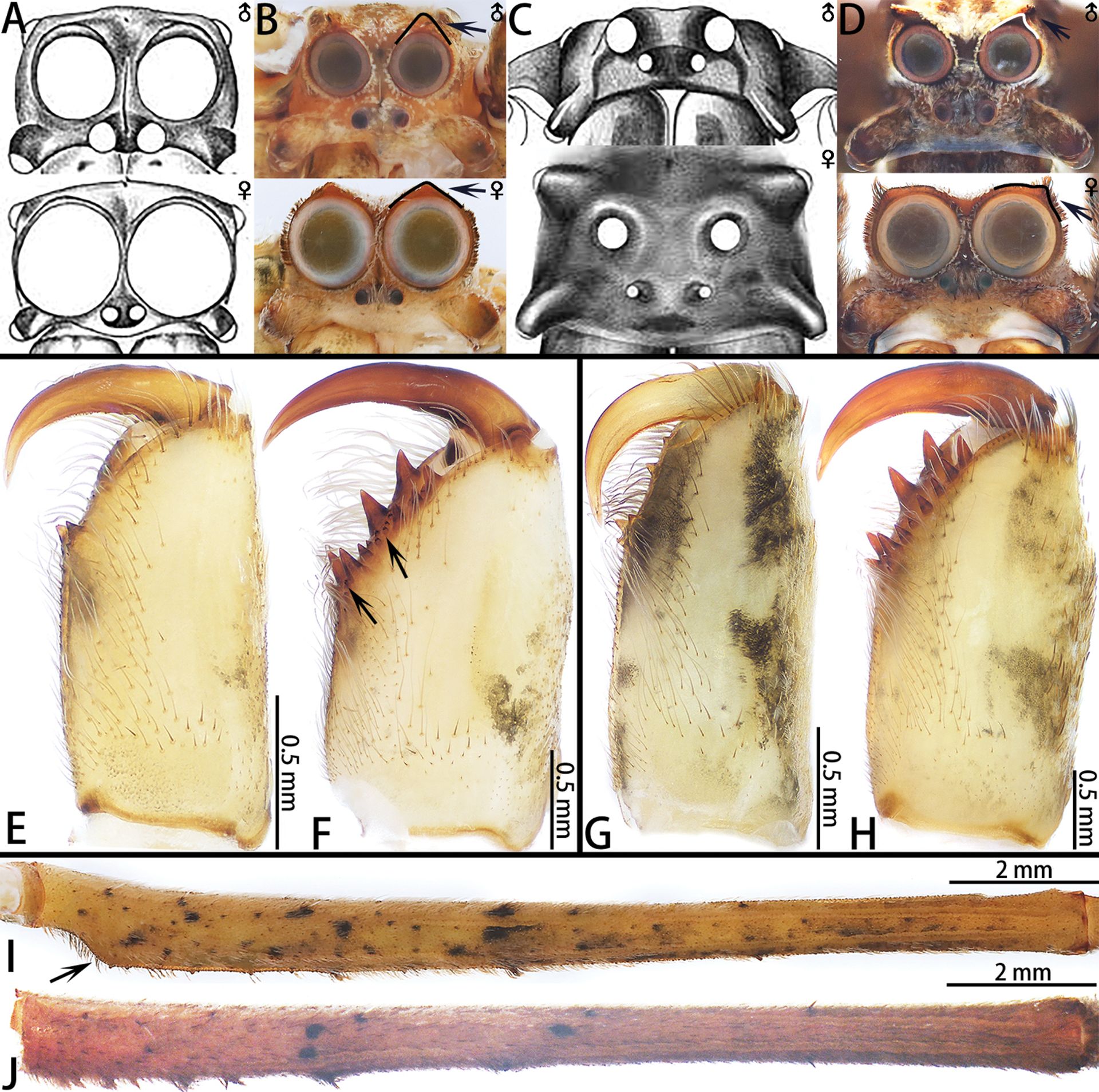
Distinguished from other spiders by the combination of: extremely large that dominate the ; long, slender legs with the first two pairs elongated for holding the capture net; and a somewhat elongated, stick-like body adapted for camouflage. The net-casting itself is diagnostic for the Deinopidae. Males are smaller than females with less pronounced eye enlargement.
Images
Habitat
Florida scrub ; longleaf pine-turkey oak sandhills. The has been documented using palm plants as daytime resting substrates.
Distribution
Southeastern United States (Florida, Georgia, Alabama with specific county records in Highlands, Polk, Marion, Lake, Sumter, Hernando, Citrus, Early, and Geneva counties); St. Vincent; Venezuela; Jamaica.
Behavior
forager. Constructs a sparse web frame for suspension, then holds a small rectangular capture net stretched between the claws of the first two pairs of legs. Uses two stereotyped attack : forward lunge for ground-dwelling prey and backward striking motion for airborne prey. Uses auditory cues to detect airborne prey when outside visual field, detected via a metatarsal sensory organ on the front legs. Exhibits web manipulation behavior. Immobile and camouflaged on plants during daylight hours. Anti- behaviors have been observed.
Similar Taxa
- Asianopis spp.Other ogre-faced spiders in Deinopidae with enlarged and net-casting ; distinguished by geographic distribution (Old World vs. New World)
- Menneus spp.Third in Deinopidae that lacks the enlarged characteristic of Deinopis and Asianopis
More Details
Silk gland morphology
Produces eight distinct silk types. Silk glands associated with cribellate silk include paracribellate, pseudoflagelliform, and cribellar silk glands. Pseudoflagelliform glands show with araneoid flagelliform glands.
Sensory biology
Shows sensory system plasticity related to visual specialization for foraging. Males are attracted to female airborne cues, suggesting chemical communication in .
Sources and further reading
- BugGuide
- Wikipedia
- GBIF taxonomy match
- iNaturalist taxon
- NCBI Taxonomy
- Catalogue of Life
- Lisa Chamberland: About Those Ogre-Faced Spiders.... | Bug Squad
- Name That Spider Species | Bug Squad
- Bug of the Week
- Silk gland morphology of the net-casting spider Deinopis spinosa
- Ogre-faced Spider, Net Casting Spider, Gladiator Spider Deinopis spinosa (Marx, 1889) (Arachnida: Araneae: Deinopidae)
- Recent Noteworthy Distribution Records forDeinopis spinosa(Marx, 1889) (Araneae: Deinopidae) in the Southeastern United States