
Calymmaria nana
(Simon, 1897)
Calymmaria nana is a of true spider in the Cybaeidae, first described by Eugène Simon in 1897. It is distributed across the United States and Canada. As a member of the Calymmaria, it is part of a group of small to medium-sized spiders commonly known as basket-web weavers, though this is not officially recognized. The species belongs to the marronoid spider clade, a large group of predominantly small, brown spiders that has been reclassified through recent molecular phylogenetic studies.
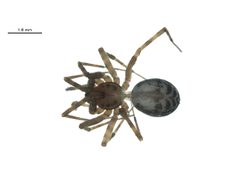
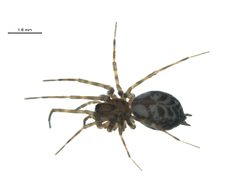
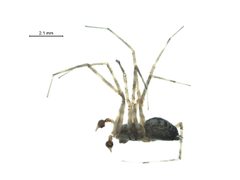
Pronunciation
How to pronounce Calymmaria nana: /kəˌlɪməˈriːə ˈnɑːnə/
These audio files are automatically generated. While they are not always 100% accurate, they are a good starting point.
Images
Distribution
United States and Canada. Specific state/province records are not documented in available sources.
Similar Taxa
- Other Calymmaria speciesThe Calymmaria contains 31 north of Mexico, most with overlapping geographic ranges along the Pacific coast and similar small, brown, nondescript . Species-level identification typically requires examination of genitalia under a microscope.
More Details
Family placement note
Calymmaria has undergone taxonomic revision. The was formerly placed in Hahniidae, and some sources (including NCBI ) may still list it there. Current classification based on molecular places Calymmaria in Cybaeidae as part of the marronoid clade.
Marronoid clade membership
Calymmaria nana belongs to the marronoid spider clade, a group of approximately 3,400 united by molecular data rather than obvious morphological synapomorphies. This clade includes such as Cybaeidae, Hahniidae, Dictynidae, and others, and exhibits remarkable ecological diversity including social species, intertidal species, and the only fully aquatic spider Argyroneta aquatica.
Sources and further reading
- BugGuide
- Wikipedia
- GBIF taxonomy match
- iNaturalist taxon
- NCBI Taxonomy
- Catalogue of Life
- The Hornet Wars: 'A Bloody Dumpster Fire' | Bug Squad
- Murder Hornets: Murder in the First Degree? | Bug Squad
- Lynn Kimsey Sheds Light on Asian Giant Hornets | Bug Squad
- Marronoids: The (Mostly) Little Brown Spiders With a Big Story to Tell
- Bug Eric: Basket-web Weavers
- Bug Eric: The Problem With "Murder"....Anything