
Araneus corticarius
(Emerton, 1884)
Humped bog orbweaver
Araneus corticarius is a small orb-weaving spider in the Araneidae, commonly known as the humped bog orbweaver. The is distributed across the United States and Canada, with records from Alberta and British Columbia. As a member of the diverse Araneus, it constructs spiral orb webs typical of the family, though specific details of its remain poorly documented.
Pronunciation
How to pronounce Araneus corticarius: /ˌærəˈniːəs kɔːrˈtɪkəriəs/
These audio files are automatically generated. While they are not always 100% accurate, they are a good starting point.
Identification
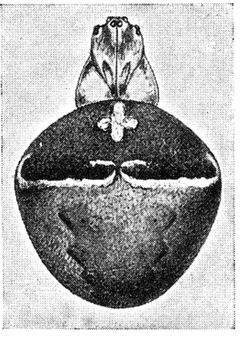
Distinguished from other Araneus by the presence of a pronounced hump on the , a trait reflected in its . Specific diagnostic characters for reliable field identification have not been well characterized in available literature. Examination of genitalic structures (epigyne in females, in males) would be required for definitive identification.
Images
Habitat
Associated with bog and wetland environments based on its , though specific microhabitat preferences have not been rigorously documented. Like other Araneus , likely constructs webs in vegetation.
Distribution
North America: United States and Canada. Canadian records include Alberta and British Columbia.
Ecological Role
As an orb-weaving spider, functions as a of flying insects within its . Specific ecological relationships have not been studied.
Similar Taxa
- Araneus marmoreusSimilar size and orb-weaving habit, but lacks the pronounced abdominal hump characteristic of A. corticarius; also exhibits more variable and often brighter coloration patterns
- Araneus diadematusOverlapping distribution and similar web structure, but has distinctive cross-shaped pattern on and lacks the humped profile
More Details
Taxonomic note
Described by James Henry Emerton in 1884. The specific epithet 'corticarius' (Latin: of bark) may suggest an original association with tree bark, though current emphasizes bog .
Sources and further reading
- BugGuide
- Wikipedia
- GBIF taxonomy match
- iNaturalist taxon
- NCBI Taxonomy
- Catalogue of Life
- Arachnida | Beetles In The Bush | Page 5
- Bug Eric: Spider Sunday: Butterfly Orbweaver
- Answer to Super Crop Challenge #2 | Beetles In The Bush
- Do Chestnut, Lemon, or Peppermint Scents Repel Spiders?
- Bug Eric: Spider Season
- new spider | Blog