
Araneus cavaticus
(Keyserling, 1881)
Barn Spider, Barn Orbweaver
Araneus cavaticus, commonly known as the barn spider, is a large orb-weaving spider native to North America. Females reach approximately 20 mm in body length and are typically yellow and brown in coloration. The is strongly associated with human structures, particularly barns and wooden buildings, where they construct their webs in rafters and under eaves. The barn spider gained cultural significance as the basis for the character Charlotte in E. B. White's children's novel Charlotte's Web.
Pronunciation
How to pronounce Araneus cavaticus: /ˌærəˈniːəs kæˈvætɪkəs/
These audio files are automatically generated. While they are not always 100% accurate, they are a good starting point.
Identification
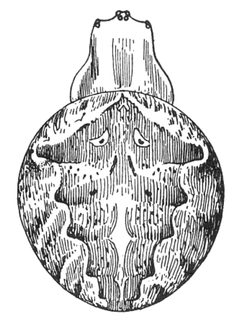
Araneus cavaticus can be distinguished from the similar Hentz's orbweaver (Neoscona crucifera), with which it shares the 'barn spider,' by examining markings, which are often more consistent in A. cavaticus. The is also distinguished by its strong preference for human constructions, particularly barns and wooden buildings, whereas N. crucifera occurs more broadly in moist woodland , yards, and gardens. The webs of A. cavaticus are relatively small compared to the spider's body size.
Images
Appearance
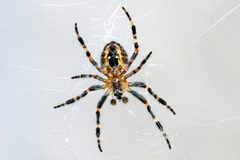
females measure approximately 20 mm in body length, making them large by North American spider standards. The body is typically yellow and brown in coloration. The webs are notably small relative to the size of the spider itself. The lacks a distinct pattern, though markings are often more consistent and can aid in identification.
Habitat
Strongly associated with human constructions, particularly wooden structures such as barns, where spiders construct webs in rafters and under eaves. Seldom found in natural away from buildings. The appears to actually prefer human constructions over natural settings.
Distribution
Native to North America. Recorded from the United States and Canada, including Vermont. The has been noted as widespread across North America in association with human structures.
Seasonality
Active during late summer and fall. Females are mature and therefore most conspicuous in autumn. Females spin webs at night and remain concealed in retreats during the day, connecting a signal thread to the web hub to detect vibrations from prey.
Diet
Feeds on insects captured in orb webs, including , flies, and other flying insects attracted to outdoor lighting.
Life Cycle
Females construct sacs containing up to 1,000 eggs, covered with fluffy yellow silk and concealed in rolled leaves. Males wander in search of mates and do not construct webs once sexually mature, having lost the physical capacity to produce the necessary silk types. The appears to have one per year in temperate climates.
Behavior
web-building : females spin webs at night and take them down or remain concealed during the day. Females compete for optimal web sites near outdoor lighting that attracts insect prey. When disturbed, the spider may shake violently in its web, possibly to startle potential . Males are nomadic and wander in search of mates, frequently entering buildings by mistake during autumn.
Ecological Role
of flying insects; contributes to pest control in and around human structures. Serves as prey for mud dauber (Sceliphron caementarium, Trypoxylon politum) that hunt orb-weavers by following web framework lines.
Human Relevance
Cultural significance as the basis for the character Charlotte in E. B. White's Charlotte's Web. Generally harmless to humans and pets despite intimidating size. Often found in and around barns and outbuildings where they may cause concern due to their size but provide beneficial pest control. Can be safely relocated using the 'cup and card' method.
Similar Taxa
- Neoscona cruciferaShares 'barn spider' and similar size, shape, and coloration; distinguished by more consistent markings in A. cavaticus and broader preference in N. crucifera
More Details
Literary significance
The served as the model for Charlotte in E. B. White's Charlotte's Web, bringing public attention to this otherwise obscure spider.
Web characteristics
The webs are notably small relative to the spider's body size, an unusual proportion among orb-weavers.