
Aculepeira carbonarioides
(Keyserling, 1892)
Rock Orbweaver
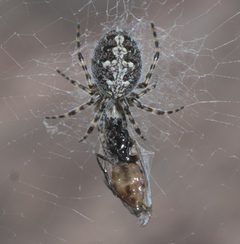
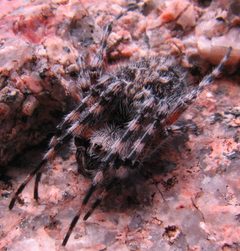
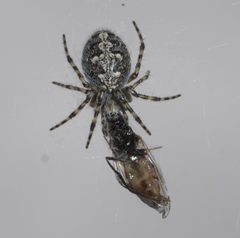
Aculepeira carbonarioides is an orb-weaving spider in the Araneidae, commonly known as the Rock Orbweaver. It is associated with high-elevation and high-latitude , particularly rocky environments near the tree line. The has been documented occupying the center of its web during daylight hours, which differs from the typical of related species. It occurs across northern North America and extends into Russia.
Pronunciation
How to pronounce Aculepeira carbonarioides: /ˌækʊliˈpaɪərə ˌkɑːrbənəˈraɪɔɪˌdiːz/
These audio files are automatically generated. While they are not always 100% accurate, they are a good starting point.
Identification
Conclusive identification to requires microscopic examination of genitalia. The Aculepeira is restricted to high elevation and/or high latitude , which helps narrow possibilities geographically. Within the genus, A. carbonarioides is distinguished from A. packardi and A. aculifera by specific morphological features not visible without magnification. abdominal markings differ from those of superficially similar orb-weavers such as Neoscona oaxacensis.
Images
Habitat
Rocky crevices of boulder-strewn slopes at or near the tree line. Associated with mixed conifer and aspen forests at elevations around 8,500 feet. Webs are constructed between branches of low-growing shrubs on gentle slopes in open meadows.
Distribution
North America: Canada (Alberta, British Columbia, Northwest Territory, Quebec, Yukon Territory) and United States (Alaska, Colorado, New Hampshire, Utah, Wyoming). Also recorded from Russia (South Siberia, north-east Siberia, and European Russia through the Far East).
Diet
Feeds on flying insects captured in the orb web. Based on research on congeneric , pollen may constitute a supplementary food source, actively consumed through extraoral digestion of pollen grains too large to be swallowed accidentally.
Behavior
Constructs wheel-shaped orb webs. Has been observed remaining in the center (hub) of the web during daylight hours, though related typically hide in a silken retreat at the web periphery during the day. Web-building occurs in open meadow between shrub branches.
Similar Taxa
- Aculepeira packardiOverlaps in geographic range and ; requires genitalia examination for reliable separation
- Neoscona oaxacensisSimilar appearance and web structure; distinguished by abdominal markings and preferences
More Details
Taxonomic Note
Older references may spell the related A. packardi as A. packardii with two 'i's.