
Acanthepeira cherokee
Levi, 1976
Cherokee Orbweaver
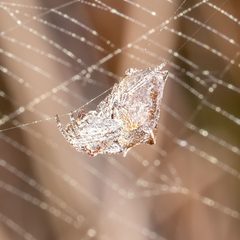
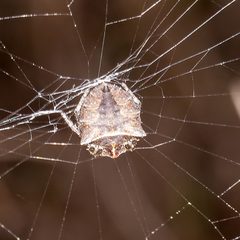
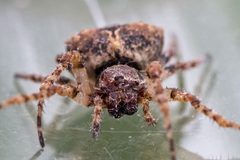
Acanthepeira cherokee is a of orb-weaving spider in the Araneidae, described by Herbert W. Levi in 1976. It belongs to a characterized by distinctive abdominal or spines that provide camouflage. The species is found in the United States, though specific details about its and remain limited in published literature.
Pronunciation
How to pronounce Acanthepeira cherokee: //əˌkænˈθɛ.pə.irə ˈtʃɛr.oʊˌkiː//
These audio files are automatically generated. While they are not always 100% accurate, they are a good starting point.
Identification
Members of the Acanthepeira are distinguished by a hard, spiny with prominent that give a star-like or thorn-studded appearance. The specific identification of A. cherokee from requires examination of genitalia and other subtle morphological features described in Levi's 1976 revision. The name honors the Cherokee Nation.
Images
Distribution
United States of America. The precise range within the USA has not been extensively documented in readily accessible sources.
Similar Taxa
- Acanthepeira stellataShares the and the characteristic spiny with ; A. stellata is the most well-documented with similar and , though it has a broader documented range
More Details
Etymology
The specific epithet 'cherokee' honors the Cherokee Nation, following a pattern in the where A. stellata was named for its star-like appearance while A. cherokee recognizes stewardship of the landscapes where these spiders occur. This naming convention parallels other Appalachian fauna named after Cherokee heritage, such as the Cherokeea attakullakulla.
Taxonomic Context
Acanthepeira cherokee was described by arachnologist Herbert W. Levi in his 1976 revision of the . Levi was a prolific spider taxonomist at Harvard's Museum of Comparative Zoology who described hundreds of orb-weaver , particularly in Araneidae and Theridiidae.
Sources and further reading
- BugGuide
- Wikipedia
- GBIF taxonomy match
- iNaturalist taxon
- Catalogue of Life
- Bug Eric: Spider Sunday: Star-bellied Orbweaver, Acanthepeira stellata
- Bug Eric: Spider Sunday: Starbellied Orbweaver
- New Project Aims to Build Equity for Indigenous Scholars in Biological Sciences
- Uncategorized | Blog - Part 22
- Bug Eric: Wasp Wednesday: Caliadurgus hyalinatus
- What’s black and white and red all over? | Beetles In The Bush