
Wulfila saltabundus
(Hentz, 1847)
Long-legged Ghost Spider
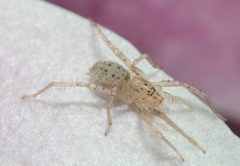
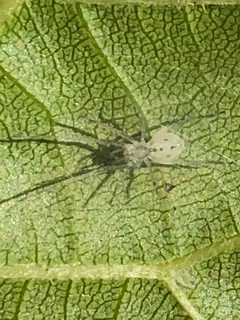
Wulfila saltabundus is a of ghost spider in the Anyphaenidae, commonly known as the Long-legged Ghost Spider. It occurs in the United States and Canada. As a member of the active hunting spider guild, it does not construct webs to capture prey but instead pursues and captures prey directly. Research has documented this species in urban environments, where it contributes to of pest insects.
Pronunciation
How to pronounce Wulfila saltabundus: //wʊlˈfiːlə ˌsæltəˈbʌndəs//
These audio files are automatically generated. While they are not always 100% accurate, they are a good starting point.
Identification
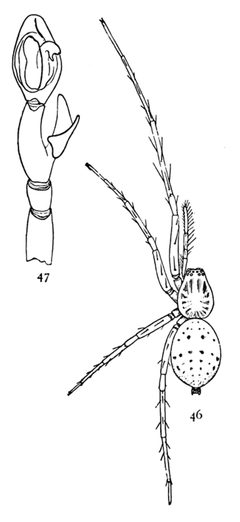
As an active hunting spider in the Anyphaenidae, Wulfila saltabundus lacks the web-building structures seen in orb-weaving or sheet-web weaving spiders. Ghost spiders (Anyphaenidae) are characterized by their wandering and long legs relative to body size. Specific diagnostic features for distinguishing W. saltabundus from are not documented in available sources.
Images
Habitat
Has been observed in urban tree and shrubs, including holly (Ilex ). Research indicates presence in both native and shrub species in urban landscapes.
Distribution
United States and Canada. Distribution records include Vermont and other unspecified locations within the two countries.
Behavior
Active hunting spider that does not construct webs for prey capture. Has been documented moving between tree and understory shrubs in urban environments.
Ecological Role
Human Relevance
Contributes to pest control in urban landscapes and ornamental plantings. Research suggests that conserving of this and other spider through tolerant management of tree pests like scale insects can enhance of pests in nearby plants.
Similar Taxa
- Other AnyphaenidaeOther ghost spiders share the active hunting and lack of web construction, requiring examination of genitalia or other subtle morphological features for -level identification.
- Other active hunting spiders (e.g., Lycosidae, Salticidae)These also hunt without webs, but differ in arrangement, body proportions, and use; Anyphaenidae typically have more elongated bodies and longer legs relative to body size compared to most wolf spiders or jumping spiders.
More Details
Urban Ecology Research
Wulfila saltabundus has been specifically identified in research on spider conservation in urban trees. A study published in the Journal of Insect Conservation documented that -infested urban trees support higher abundance of active hunting spiders, including Wulfila , in understory shrubs. This research indicates that management practices tolerating certain tree pests may benefit spider and their services.