
Wulfila
O. Pickard-Cambridge, 1895
ghost spiders
Species Guides
3- Wulfila albens(ghost spider)
- Wulfila saltabundus(Long-legged Ghost Spider)
- Wulfila tantillus
Wulfila is a of ghost spiders ( Anyphaenidae) comprising at least 40 described . These spiders are active hunters that do not construct webs for prey capture. They are commonly found in urban environments, where research has documented their association with -infested trees and shrubs. As members of the hunting spider guild, they contribute to of pest insects in managed landscapes.
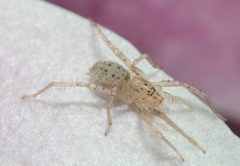
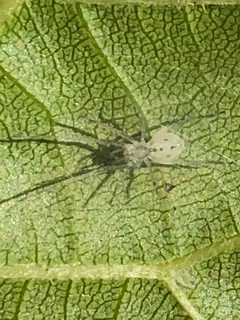
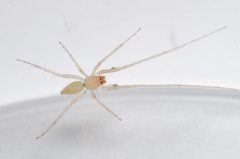
Pronunciation
How to pronounce Wulfila: /ˈwʊlfɪla/
These audio files are automatically generated. While they are not always 100% accurate, they are a good starting point.
Identification
Wulfila are distinguished from other Anyphaenidae by their active hunting and lack of web-building. They can be separated from orb-web weavers (e.g., Argiope) and sheet-web weavers (e.g., Parasteatoda) by their non-web-building habit. Within the ghost spider , species-level identification requires examination of genitalic structures and other microscopic characters.
Images
Habitat
Documented from urban tree and shrubs, particularly in association with -infested trees. Has been observed in holly shrubs (Ilex ) below infested trees.
Distribution
Records from Vermont and elsewhere in the United States. The occurs in North America, though specific range boundaries for the genus and individual require further documentation.
Diet
Preys on insects and other small arthropods. Has been documented in prey-removal experiments involving Drosophila and caterpillars (Helicoverpa zea, Spodoptera frugiperda) in urban shrub .
Behavior
Active hunting spider that does not construct webs for prey capture. Chases and captures prey directly. Documented as part of natural enemy supported by -infested urban trees, with individuals found in both tree and understory shrubs.
Ecological Role
in urban . Contributes to services in managed landscapes. Research indicates that -infested trees support higher abundances of Wulfila and other hunting spiders, suggesting these spiders benefit from prey resources associated with scale insect .
Human Relevance
Beneficial in urban and landscape settings. Supports natural pest regulation in ornamental plantings. Research from North Carolina State University indicates that tolerating scale insects on urban trees helps conserve Wulfila and similar spiders, which in turn contribute to of pests in nearby shrubs.
Similar Taxa
- Other Anyphaenidae generaSimilar active hunting and general ; requires microscopic examination for definitive separation
- Clubionidae (sac spiders)Similar active hunting and body form; differs in arrangement and structure
- Lycosidae (wolf spiders)Similar active hunting strategy; differs in arrangement (two large eyes in Lycosidae) and preference
More Details
Research context
Wulfila was specifically mentioned in research by Caleb Wilson and Steven Frank (NC State University) documenting spider guild responses to insect in urban red maple trees. This study found that scale-infested trees supported more active hunting spiders, including Wulfila, compared to uninfested trees.