
Anyphaena aperta
(Banks, 1921)
ghost spider
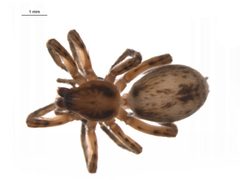
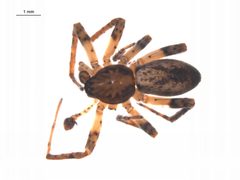
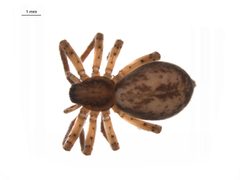
Anyphaena aperta is a of ghost spider in the Anyphaenidae, first described by Nathan Banks in 1921. The species is native to North America and has been documented in both the United States and Canada. It has been observed utilizing Australian tea tree plants (Leptospermum species) as , representing an to an plant species in its range. Ghost spiders in this family are generally hunters that do not build webs to capture prey.
Pronunciation
How to pronounce Anyphaena aperta: /ænɪˈfiːnə əˈpɜːtə/
These audio files are automatically generated. While they are not always 100% accurate, they are a good starting point.
Images
Habitat
Has been observed in association with Australian tea tree plants (Leptospermum ), an plant in North America, using these plants as . Based on characteristics, likely occupies vegetation in wooded or shrubby environments.
Distribution
United States and Canada. Specific state/province records are not well documented in available sources.
Behavior
; attracted to lights at night based on observation of . As a ghost spider ( Anyphaenidae), likely an active hunter that does not construct capture webs.
Similar Taxa
- Anyphaena spp.Other in the Anyphaena share the 'ghost spider' and general body plan; specific identification requires examination of genitalia or other detailed morphological features.
- Other Anyphaenidae members share traits of active hunting , activity, and similar overall appearance; distinguished by -level characters.
More Details
Nomenclatural history
Originally described as Gayenna aperta by Banks in 1921; subsequently transferred to Anyphaena.
Invasive plant association
One of the few documented cases of a native North American spider adapting to use an plant (Australian tea tree) as .