
Ornithonyssus
Sambon, 1928
bird mites, fowl mites, rat mites
Species Guides
2- Ornithonyssus bacoti(tropical rat mite)
- Ornithonyssus sylviarum(Northern Fowl Mite)
Ornithonyssus is a of mites in the Macronyssidae. The genus includes economically important poultry pests such as the (O. sylviarum) and (O. bursa), as well as the tropical rat mite (O. bacoti) which affects rodents and can bite humans. in this genus are obligate blood-feeders that complete their entire on the or in close association with host nesting material. Several species have significant veterinary and medical importance due to their impacts on poultry production and potential to cause human dermatitis.
Pronunciation
How to pronounce Ornithonyssus: //ˌɔːrnɪˈθɒnɪsəs//
These audio files are automatically generated. While they are not always 100% accurate, they are a good starting point.
Identification
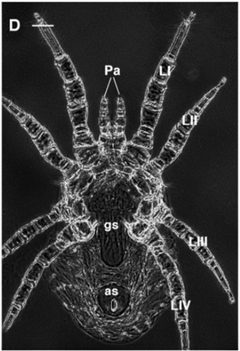
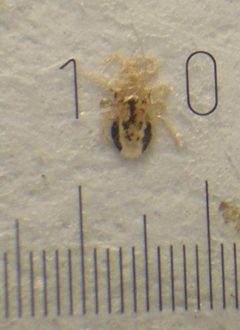
Identification to level requires microscopic examination. Key species include: O. sylviarum () — dark red to black, approximately 1 mm, found on vent, tail, back and legs of birds; O. bursa () — similar appearance but with different geographic distribution and preferences; O. bacoti (tropical rat mite) — associated with rodents, has a painful bite. Distinguishing Ornithonyssus from Dermanyssus (chicken mite): Ornithonyssus species typically remain on the host continuously, while hides in cracks and crevices during the day and feeds at night.
Images
Habitat
Distribution
Widespread distribution with -specific ranges. O. sylviarum occurs in temperate and subtropical regions globally; O. bursa in tropical and subtropical regions; O. bacoti has been documented in the La Plata Basin, Argentina, and occurs worldwide in association with commensal rodents. GBIF records indicate presence in Denmark, Norway, and Sweden.
Seasonality
Mite increase in cooler weather. In poultry systems, can persist year-round under suitable conditions. O. sylviarum populations peak during autumn and winter months in temperate regions.
Diet
Obligate . All stages feed on blood from avian or mammalian . O. sylviarum and O. bursa feed on poultry blood. O. bacoti feeds on rodent blood and will bite humans when host availability is limited.
Host Associations
- Gallus gallus - domestic chicken; primary for O. sylviarum and O. bursa
- Rattus norvegicus - primary for O. bacoti (tropical rat mite)
- cricetid rodents - documented for O. bacoti in Argentina
- Homo sapiens - accidental O. bacoti bites humans causing dermatitis; O. sylviarum can transfer to people handling infested birds but does not establish
Life Cycle
Holometabolous with four stages: , larva, nymph (with two instars), and . The entire is completed on the for O. sylviarum, requiring approximately one week under ideal conditions. Eggs are laid on the host or in nest material. Larvae are typically non-feeding; nymphs and adults are blood-feeding.
Behavior
O. sylviarum remains on the continuously, hiding in feathers around the vent, tail, back, and legs. O. bacoti is and will leave rodent hosts to seek alternative blood sources when host decline. occurs through host movement and nest material . Dust bathing by chickens can reduce mite populations through mechanical removal.
Ecological Role
of birds and mammals. In poultry systems, heavy reduce production by 10-15% and cause weight loss. O. bacoti has demonstrated potential for spp. and Bartonella sp. in poultry manure systems include macrochelid mites and hister beetles, which may contribute to .
Human Relevance
Significant economic pest of poultry worldwide. O. sylviarum is the most common of poultry in many regions. O. bacoti causes human dermatitis characterized by scattered papules on arms, shoulders, and legs, often misdiagnosed as bacterial , fungal infection, or allergy. in animal houses affect researchers and . Control methods include sulfur dust bags, dust baths, and such as fluralaner.
Similar Taxa
- Dermanyssus gallinaeBoth are poultry-associated blood-feeding mites in Mesostigmata. D. gallinae hides in cracks and crevices during the day and feeds at night, while Ornithonyssus typically remain on the continuously.
- Knemidocoptes mutansBoth affect poultry but K. mutans () burrows under leg causing lameness and crust formation, while Ornithonyssus feed on blood and remain on feathered areas.
More Details
Control in cage-free systems
Transition from battery cages to cage-free housing complicates mite control because solid floors and nest boxes provide hiding places and make spray penetration difficult. Research demonstrates that dust baths containing mixtures, combined with minimal beak trimming to allow effective , can maintain mite below economically damaging thresholds.
Insecticide resistance
Research has documented permethrin resistance in O. sylviarum from commercial poultry facilities. Sulfur dust bags have proven more effective than permethrin strips in controlled studies.
Sources and further reading
- BugGuide
- Wikipedia
- GBIF taxonomy match
- iNaturalist taxon
- NCBI Taxonomy
- Catalogue of Life
- Poultry Pest Management - AgriLife Extension Entomology
- Dust Baths and Longer Beaks Can Make Cage-free Chickens into Mite-free Chickens
- Battling Chicken Mites with Bags of Brimstone
- Backyard Chickens May Have Mites, Lice and Fleas
- Backyard Chickens Harbor Greater Diversity of Mites and Lice than Farm-raised Chickens
- The Avian Mite, Ornithonyssus sylviarum, on Mammalian Hosts with References to Transmission to Poultry
- Dermatitis associated with the Ornithonyssus bacoti
- Ecoregional distribution and parasitism of the mite Ornithonyssus bacoti Hirst (Mesostigmata: Macronyssidae) in cricetid rodents across localities from the La Plata Basin, Argentina
- Efficacy of fluralaner solution administered to egg layer chickens through drinking water for control of northern fowl mite (Ornithonyssus sylviarum).