Riccardoella
Berlese, 1923
slug mites, snail mites
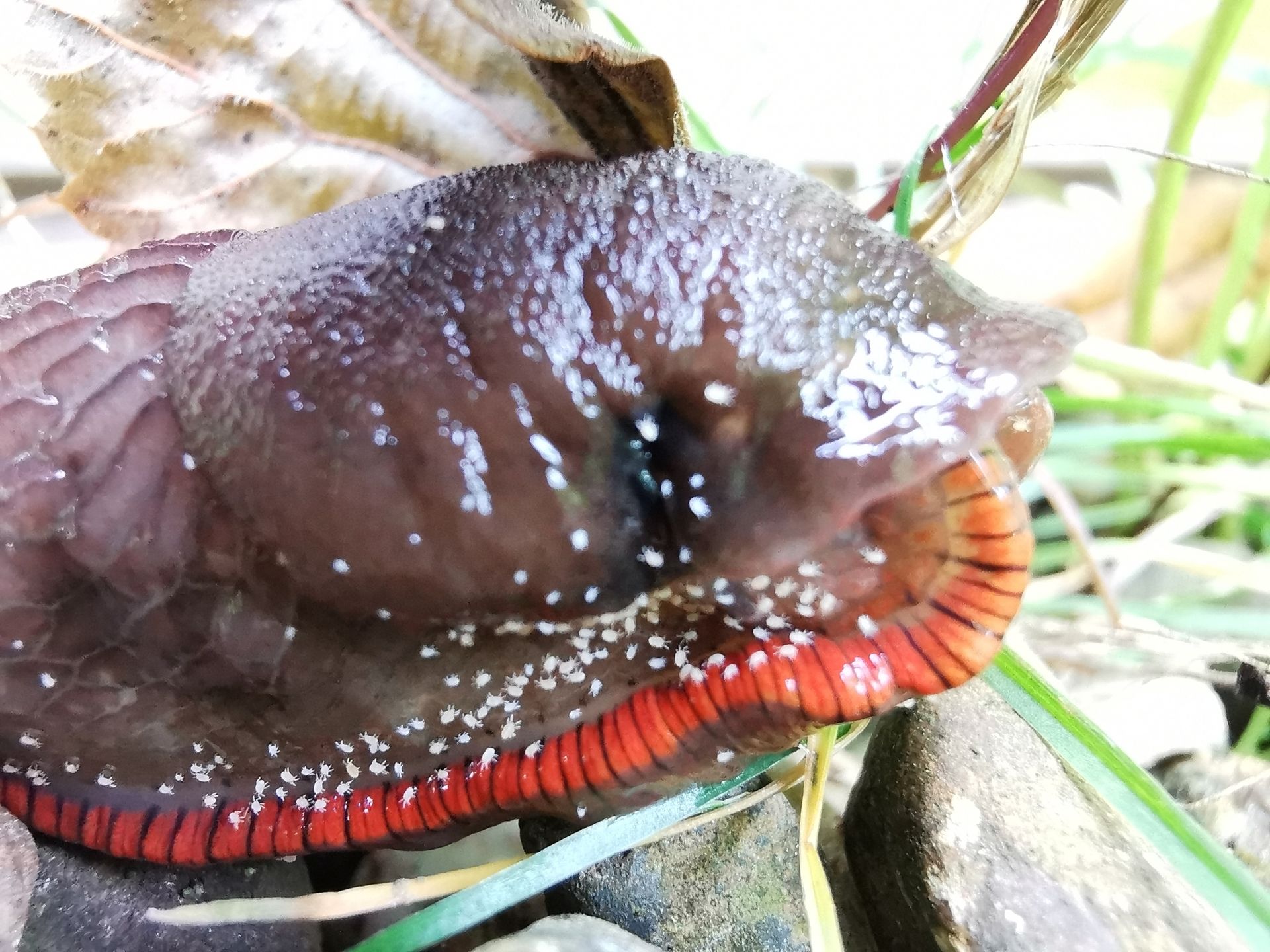
Riccardoella is a of parasitic mites in the Ereynetidae that are obligate of terrestrial gastropod molluscs, primarily slugs and snails. The genus contains approximately six described distributed across Europe, North America, East Asia, and New Zealand. These mites inhabit mantle cavities, respiratory pores, and lung spaces, feeding on host mucus and tissue fluids. Their are tightly coupled to host , with developmental stages periodically leaving hosts to moult before reinfesting.
Pronunciation
How to pronounce Riccardoella: /rɪˌkɑːrˈdoʊəˌlɑː/
These audio files are automatically generated. While they are not always 100% accurate, they are a good starting point.
Identification
Identification to level requires examination of palpal and leg chaetotaxy, particularly the shape of the famulus on tibia I. Molecular analysis supports species-level discrimination. The can be distinguished from related Ereynetidae by its specialized association with gastropod and corresponding morphological adaptations for this parasitic lifestyle.
Images
Habitat
Strictly associated with terrestrial gastropod ; found in mantle cavities, respiratory pores (pneumostomes), and lung spaces of slugs and snails. Not found free-living in litter or soil layers. Requires humid microenvironments provided by host bodies and mucus for survival.
Distribution
Europe, North America, East Asia (Japan), New Zealand, and Cyprus. Specific have more restricted ranges: R. limacum in Europe and North America; R. tokyoensis in East Japan (Kanto and east Tokai areas); R. reaumuri and R. canadensis in Canada; R. novaezealandiae in New Zealand.
Seasonality
occurs year-round with highest during warm seasons. Larval and nymphal stages most commonly observed in warm seasons; proto- and tritonymph stages uncommon in some .
Diet
mucus and tissue fluids, particularly from mantle cavity and respiratory pore areas. Feeding on blood and tissue exudates has been observed. Intracellular symbiotic Haplosporidia in the gut may supplement nutrition with B vitamins.
Host Associations
- slugs (Limacidae) - obligate primary including Limacus maculatus, Limacus flavus
- snails (various families) - obligate including clausiliid snails and potentially Oxychilidae
Life Cycle
→ larva → nymph → . Eggs deposited in mantle cavity, providing protection and humidity. Deutonymph functions as the nympha generans stage. Developmental stages leave host to moult on substrate, then return to reinfest. Complete cycle approximately 3-4 weeks under favorable conditions. Some show reduction or disappearance of fully adult form from .
Behavior
Obligate with temporary departure from for moulting. Active between hosts facilitated by mucus trails; mites can move across substrate to locate new hosts. Transmission occurs during physical contact between hosts. Preference for mucus from parasitized slugs observed, encouraging host contact and host-switching. Negative geotaxis and thigmotaxis in free-living stages.
Ecological Role
of terrestrial gastropods; tissue damage and fluid loss may impact . Low observed in some associations (no host mortality over 2 months, no inflammation in naturally infected tissue). Potential influence on host and . Facilitation of outbreeding through host-switching behavior.
Human Relevance
Potential agent for pest slug and snail . Subject of acarological research due to unique features including potentially primitive in larvae. No documented direct medical or economic impact on humans.
Similar Taxa
- other EreynetidaeRiccardoella distinguished by obligate gastropod ; related lack this specialized association and corresponding morphological adaptations
- other prostigmatid mites associated with molluscsRiccardoella specifically inhabits internal spaces (mantle cavity, lung) rather than external surfaces; -level identification requires chaetotaxy and famulus
More Details
Life history reduction
Some exhibit evolutionary reduction of the fully form, with the deutonymph functioning as the reproductive stage (nympha generans)
Symbiotic gut fauna
Intracellular Haplosporidia present in gut and , potentially supplying B vitamins to supplement -derived nutrition
Host transmission mechanisms
Mites enter lung via the pneumostome in some ; multiple transmission including direct contact and mucus-trail following
Sources and further reading
- BugGuide
- Wikipedia
- GBIF taxonomy match
- iNaturalist taxon
- NCBI Taxonomy
- A Monograph of the Slug Mite—Riccardoella limacum (Schrank.).
- Studies on the life history ofRiccardoella limacum(Schrank) (Acari-Trombidiformes)
- Natural history study on Riccardoella tokyoensis: life history with ontogeny and host distribution records
- First report of the Slug Mite Riccardoella oudemansi Thor (Acari: Ereynetidae) in Cyprus
- Transmission of parasitic mites (Riccardoella oudemansi) between limacid slug hosts: the role of parasite and host behaviour
- Complete mitochondrial genomes of two snail mite: Riccardoella tokyoensis and R. reaumuri (Acariformes, Prostigmata, Ereynetidae).