
Podapolipidae
Genus Guides
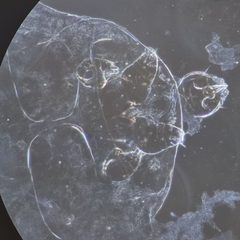
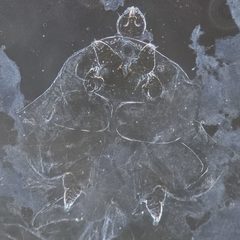
1Podapolipidae is a of highly specialized mites (order Trombidiformes) that are obligate of insects, primarily beetles. Members inhabit protected microhabitats beneath or within body cavities. The family exhibits remarkable host specificity, with most restricted to single host species. Transmission occurs primarily through sexual contact between hosts. The family includes notable such as Eutarsopolipus (parasitic on carabid beetles), Chrysomelobia (on chrysomelid beetles), and Coccipolipus (on ladybirds). Some species can negatively impact host and longevity, while others manipulate host to enhance transmission.
Pronunciation
How to pronounce Podapolipidae: //poʊˌdæpəˈlɪpɪˌdaɪ//
These audio files are automatically generated. While they are not always 100% accurate, they are a good starting point.
Identification
Podapolipidae are distinguished from other heterostigmatic mites by their obligate parasitic relationship with insect , in contrast to the phoretic associations of such as Dolichocybidae, Pygmephoridae, and Scutacaridae. Within the family, are differentiated by host associations and morphological traits: Eutarsopolipus are characterized by tarsal setation patterns and leg I claw presence/absence (features that show intraspecific variability); Chrysomelobia species are identified by male and larval female setation patterns; and Podapolipus species associated with orthopterans are recognized by reduced and idiosomatic setae in larval females and adult males.
Images
Habitat
Subelytral spaces of beetles (Carabidae, Chrysomelidae, Coccinellidae, Scarabaeidae) represent the primary ; some occupy internal cavities including reproductive tracts (Ovacarus) or sternal apodemes (Podapolipus on Gryllacrididae). beetles occur in diverse environments including rainforests, pads, and agricultural settings.
Distribution
Documented from Australia (eastern Queensland rainforests), Iran (Isfahan Province), Europe (Italy, France, Spain), East Africa, North America, and Mexico. Distribution is constrained by ranges; records exist for Denmark and Sweden (GBIF).
Seasonality
occurs on diapausing beetles (documented in Chrysomelobia labidomerae). Activity patterns follow reproductive cycles.
Host Associations
- Carabidae - primary Subelytral ; includes Castelnaudia, Notonomus, Trichosternus, Syntomus, Pasimachus, Stenolophus
- Chrysomelidae - primary Includes Labidomera clivicollis (milkweed leaf beetle), Paropsis, Paropsisterna, Dicranosterna, Trachymela
- Coccinellidae - primary Includes Cycloneda sanguinea
- Scarabaeidae - primary Includes Scarabaeus pius, S. semipunctatus, Canthon humectus
- Gryllacrididae - Podapolipus gryllacridi on Chauliogryllacris; first podapolipid record from Orthoptera
Life Cycle
are laid on body surfaces (e.g., upper surfaces of hind wings in Chrysomelobia labidomerae). Eggs hatch in approximately 7 days. Larval stadium lasts approximately 7 days, with larvae feeding at wing bases and in thoracic crevices, swelling to twice original length. Second half of larval stage is inactive ( ), with individuals cemented to elytral undersurfaces; this pharate stage may represent a calyptostatic nymphal instar enclosed in a cuticular sac. Adult males accompany inactive female larvae and apparently copulate with newly emerged adult females. is arrhenotokous (males produced from unfertilized eggs).
Behavior
Sexual transmission between during copulation is the primary mechanism. Motile stages (larvae or females) transfer between host individuals during mating. Some modify host sexual and behavioral traits to enhance transmission: parasitized male milkweed leaf beetles (Labidomera clivicollis) contact other males more frequently and show increased mating success. Synhospitality (multiple mite species on single host species) and co- (individual hosts hosting multiple mite species) occur, particularly on Castelnaudia beetles. Some species exhibit hyperparasitism: Podapolipus gryllacridi larval females use gamasine mites as phoretic and facultative hyperparasitic hosts.
Ecological Role
that can reduce , including lower , reduced viability, and decreased longevity in some ladybird hosts. At high levels in Chrysomelobia labidomerae, measurable effects on host longevity or fecundity have not been observed. Potential role in has been investigated for some .
Human Relevance
Investigated for potential of pest beetles, including the Colorado potato beetle. Negative impacts on beneficial insects (e.g., ladybirds) may occur through reduced of parasitized individuals.
Similar Taxa
- DolichocybidaeBoth are heterostigmatic mite associated with insects, but Dolichocybidae are phoretic rather than parasitic
- PygmephoridaeBoth are heterostigmatic mite , but Pygmephoridae are phoretic on insects rather than obligate
- ScutacaridaeBoth are heterostigmatic mite , but Scutacaridae are phoretic on insects rather than obligate
- CrotalomorphidaeBoth are heterostigmatic parasitic on Carabidae (specifically Stenolophus in North America), distinguished by morphological and traits
More Details
Host specificity patterns
Most are restricted to single species; however, some parasitize multiple host species or , and multiple mite species may coexist on single host species, sometimes partitioned by microhabitat (elytral cavity, hindwings, ).
Speciation patterns
Eutarsopolipus shows contrasting diversification: extraordinary radiation on Castelnaudia (multiple unique per , up to 4 species) versus minimal diversification on Notonomus (typically one mite species per host). This pattern may relate to host longevity and speciation rates.
Generic diversity
At least 20 are recognized, including Eutarsopolipus (~99 ), Chrysomelobia, Podapolipus, Coccipolipus, Tarsopolipus, Dorsipes, Ovacarus, Regenpolipus, Dilopolipus, Archipolipus, Stenopolipus, Scarabapolipus, and Tetrapolipus.
Sources and further reading
- BugGuide
- Wikipedia
- GBIF taxonomy match
- iNaturalist taxon
- NCBI Taxonomy
- Catalogue of Life
- Identity of the host ofTetrapolipus nicsaraeHusband, 1988 (Acari: Podapolipidae)
- Two heterostigmatic mite species (Acari: Dolichocybidae, Podapolipidae) associated with Scarabaeus pius (Coleoptera: Scarabaeidae) from Iran
- Contrasting species diversification of Eutarsopolipus (Acariformes: Podapolipidae) on Castelnaudia and Notonomus (Coleoptera: Carabidae)
- A New Genus and Species of Mite (Acarina: Podapolipidae) Associated with the Coccinellid Cycloneda sanguinea1
- THE BIOLOGY OF CHRYSOMELOBIA LABIDOMERAE EICKWORT, AND ITS POTENTIAL TO CONTROL THE COLORADO POTATO BEETLE (PARASITIC MITE, PODAPOLIPIDAE, BIOLOGICAL CONTROL)
- New species of Eutarsopolipus (Trombidiformes: Podapolipidae) from the pterostichine genera Castelnaudia and Trichosternus (Coleoptera: Carabidae) in Australia
- Systematics and phylogeny of Chrysomelobia species (Acari : Podapolipidae), sexually transmitted parasites of chrysomelid beetles
- Two new species of Eutarsopolipus (Acari: Prostigmata: Podapolipidae) parasitizing Syntomus lateralis (Coleoptera: Carabidae) from Iran
- Ovacarus Peellei, a Nre Species of Mite (Acarina: Podapolipidae) Associated with the Carabid Pasimachus Elongatus
- Distribution of Crotalomorphidae and Podapolipidae (Acari: Heterostigmata), Ectoparasites of Stenolophus (Coleoptera: Carabidae) in North America
- A New Genus and Species of Mite (Acarina: Podapolipidae) Associated with Canthon humectus1
- A new species of Podapolipus (Acari: Heterostigmata: Podapolipidae) from an Australian gryllacridid cricket (Orthoptera), with keys to orthopteran-associated species of the genus
- Spatial pattern analysis ofChrysomelobia labidomeraeEickwort (Acari: Tarsonemina; Podapolipidae) on Mexican hosts
- DEVELOPMENT AND BIONOMICS OF CHRYSOMELOBIA LABIDOMERAE (ACARI: TARSONEMINA; PODAPOLIPIDAE), A PARASITE OF THE MILKWEED LEAF BEETLE (COLEOPTERA: CHRYSOMELIDAE)
- Sheltered life beneath elytra: three new species of Eutarsopolipus (Acari, Heterostigmatina, Podapolipidae) parasitizing Australian ground beetles.