
Torrenticolidae
Thor, 1902
torrent mites
Genus Guides
3Torrenticolidae is a of water mites (Acari: Hydrachnidia) in the order Trombidiformes. Members are tiny, heavily sclerotized, crawling arthropods found in running freshwater . The family contains approximately 5 and more than 400 described , with the genus Torrenticola being the most diverse and widespread. is highest in tropical regions, though the family occurs on all continents except Antarctica.
Pronunciation
How to pronounce Torrenticolidae: //tɔˈrɛntɪkoʊlɪˌdaɪ//
These audio files are automatically generated. While they are not always 100% accurate, they are a good starting point.
Identification
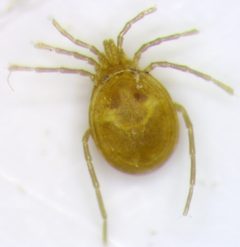
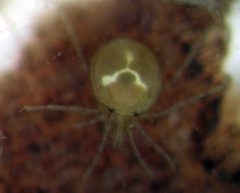
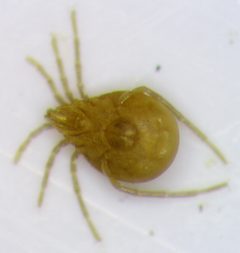
Torrenticolidae mites are distinguished from other water mite by their heavily sclerotized body and association with torrential freshwater . The Torrenticola, which dominates the family, has been shown to exhibit distinctive color markings that can aid in identification; these markings vary among species and can include patterns such as blood-red smears. Species-level identification often requires integrative approaches combining , color pattern, and sequence data.
Images
Habitat
Running freshwater including springs, streams, and rivers. Members avoid habitats with silty substrata and intermittent flow. In Rica, have been found in all types of springs and running waters, with distinct altitudinal zonation and microhabitat specificity observed. High mountain regions represent centers of diversity and .
Distribution
All continents except Antarctica. Highest occurs in tropical regions and Northern Temperate zones. Documented from North America (United States, Canada), Central America ( Rica), South America, Europe, Asia (South Korea, Russian Far East, Iran, Philippines), and Africa.
Behavior
Crawling locomotion on hard substrates in flowing water. show differential demands and microhabitat specificity. In Rica, distinct altitudinal zonation patterns have been observed among species. Some species exhibit different sensitivity to pollution, suggesting potential for bioindicator applications.
Ecological Role
Bioindicator potential for monitoring aquatic quality. In Rican streams and springs, Torrenticola is the most frequent and abundant water mite . The presence and composition of torrenticolid mites has been used to assess ecological characteristics of areas with unstable surface water regimes.
Human Relevance
Used as indicators of aquatic health and water quality. Their sensitivity to degradation, particularly avoidance of silty substrata and intermittent flow, makes them valuable for assessing stream conditions. Recent taxonomic studies have highlighted their potential for detailed biodiversity assessment in freshwater monitoring programs.
Similar Taxa
- Other Hydrachnidia familiesTorrenticolidae can be distinguished from other water mite by their heavy and strict association with running water ; many other water mite families occur in lentic (still water) environments or show less substrate specificity.
Sources and further reading
- BugGuide
- Wikipedia
- GBIF taxonomy match
- iNaturalist taxon
- NCBI Taxonomy
- Catalogue of Life
- More Than 70 New Species of Water Mites Discovered via DNA and Color Markings
- Uncategorized | Blog - Part 37
- Tiny water creepy crawlies from South Korea and the Russian Far East | Blog
- The water mite genus Torrenticola (Hydrachnidia: Torrenticolidae) in Costa Rica – ecology, diversity, and bioindicator potential
- Water mite species of the genus Monatractides K. Viets (Acari: Hydrachnidia, Torrenticolidae) from Iran, with the description of two new species