
Unionicola
Haldeman, 1842
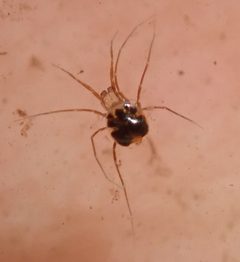
Unionicola is a of freshwater water mites ( Unionicolidae) described by Haldeman in 1842. The genus has distribution and comprises parasitic primarily associated with molluscan , though some species associate with freshwater sponges. Most species infest unionid mussels, while U. crassipes and U. minor are associated with Spongillidae sponges. The mite-host relationship involves consumption of host mucus and tissue, with potential negative effects on host .
Pronunciation
How to pronounce Unionicola: /ˈjuːniːoʊnɪˌkoʊlə/
These audio files are automatically generated. While they are not always 100% accurate, they are a good starting point.
Images
Habitat
Freshwater aquatic including lakes, rivers, ponds, and canals. Specific survey sites in Thailand included water bodies across Bangkok, Nonthaburi, Nakhon Pathom, Samut Sakhon, Samut Prakan, Pathum Thani, Chonburi, and Rayong provinces.
Distribution
. Documented from Asia (Thailand), Europe (Denmark, Norway, Sweden), and North America. The subgenus Polyatax has been reported in Asia and North America.
Diet
Parasitic consumption of mucus and tissue of molluscan .
Host Associations
- Filopaludina sumatrensis polygramma - Gastropoda: Viviparidae; 17.10%, mean intensity 2.49 /infected
- Filopaludina martensi martensi - Gastropoda: Viviparidae; 3.83%, mean intensity 2.18 /infected
- Unionidae (freshwater mussels) - Most Unionicola ; relationship described as symbiotic with evidence of tissue consumption and potential reduction
- Spongillidae (freshwater sponges) - associationU. crassipes and U. minor specifically
Behavior
Parasitic of gastropod and molluscan tissue. present: females larger than males, with genital fields and inner spine on genital fields.
Sources and further reading
- BugGuide
- Wikipedia
- GBIF taxonomy match
- iNaturalist taxon
- NCBI Taxonomy
- Catalogue of Life
- The First Report of a Water Mite Unionicola (Trombidiformes: Unionicolidae) Infection in Filopaludina spp. (Gastropoda: Viviparidae) from Thailand with a Description of a New Species of Unionicola (Polyatax) kasetbangkhenensis sp. nov.