
Smarididae
Vitzthum, 1929
Genus Guides
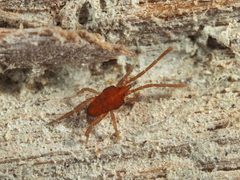
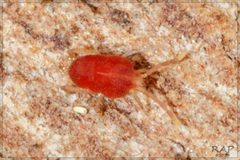
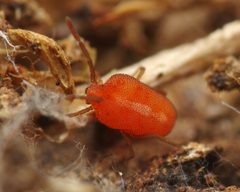
1Smarididae is a of large predatory mites in the order Trombidiformes. Members possess elongated oval bodies with a distinctive pointed , dense setation, and often striking red coloration. The family includes exceptionally large , with the Cretaceous fossil *Immensmaris chewbaccei* representing the largest known erythraeoid mite at over 8 mm in length. These active are part of the superfamily Erythraeoidea, characterized by their slender, sometimes elongated legs and reduced number (one or two pairs).
Pronunciation
How to pronounce Smarididae: /sməˈrɪdɪdei/
These audio files are automatically generated. While they are not always 100% accurate, they are a good starting point.
Identification
Distinguished from related Erythraeidae by body shape: Smarididae have long oval bodies with a distinctly pointed margin, whereas Erythraeidae tend toward more rounded or truncated anterior profiles. number is reduced to one or two pairs (Erythraeidae typically have two pairs). The combination of large body size, dense hair covering, red coloration, and slender legs separates them from most other prostigmatan mite . Fossil representatives are recognized by their exceptional size among acariform mites.
Images
Habitat
Associated with vegetation; nine new from South Africa were described from plant associations. Specific microhabitat preferences within vegetation are not well documented.
Distribution
Present-day distribution includes South Africa (documented descriptions) and presumably broader tropical to subtropical regions given the 877 iNaturalist observations. Fossil record includes Cretaceous deposits, indicating ancient lineage with wide historical distribution.
Diet
Predatory; specific prey not documented in available sources.
Ecological Role
Predatory mites that likely contribute to regulation of other small in vegetation .
Similar Taxa
- ErythraeidaeBoth belong to superfamily Erythraeoidea and share large size, predatory habit, and often red coloration. Erythraeidae differ in having more rounded body margin and consistently two pairs of .
More Details
Fossil record
The Cretaceous *Immensmaris chewbaccei* is the largest fossil acariform mite ever recorded, with an idiosoma exceeding 8 mm in length, and represents the largest known erythraeoid mite.