
Phenopelopidae
Petrunkevitch, 1955
Genus Guides
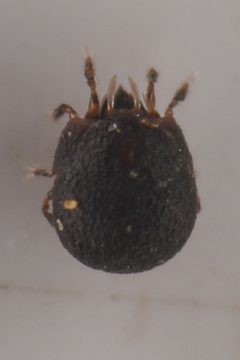
1Phenopelopidae is a of oribatid mites comprising 4 and approximately 106 . are small (400–900 μm), typically dark brown to black, with distinctive flat blade-like and movable pteromorphs. Juveniles are soft-bodied, light brown, and possess plicate . These mites inhabit forest floor microhabitats and appear to be primarily fungal feeders.
Pronunciation
How to pronounce Phenopelopidae: //ˌfiːnəˌpɛˈloʊpɪˌdiː//
These audio files are automatically generated. While they are not always 100% accurate, they are a good starting point.
Identification
Distinguished from other oribatid by: flat blade-like ; elongate pelopsiform or normally developed with small chelae; broad tectum on notogaster overhanging interlamellar setae and bothridial insertions; movable pteromorphs; and broad custodium. The combination of lamellae structure and tectum is particularly diagnostic.
Images
Habitat
Forest floor microhabitats including leaf litter beneath trees, moss, forest meadows, bog edges, grasslands, and woodland areas.
Distribution
at level. Eupelops: cosmopolitan; Nesopelops: Oceanic and Oriental regions; Peloptulus: Holarctic, Neotropical, and Oriental regions; Propelops: Holarctic. GBIF records confirm presence in Denmark, Norway, and Sweden.
Diet
Primarily fungal feeders; at least one has been observed feeding on living plant material.
Life Cycle
Development includes larval and nymphal stages preceding adulthood. stages differ markedly from in size, body texture, and coloration. Detailed information is limited to a few .
Behavior
Juveniles of some possess long marginal setae, possibly functioning in defense against small .
Ecological Role
Contributes to decomposition and nutrient cycling in forest floor through .
Similar Taxa
- Other Oribatida familiesDifferentiated by the unique combination of flat blade-like , broad tectum, and movable pteromorphs; most other lack this specific morphological suite.
More Details
Taxonomic composition
contains four : Eupelops (), Nesopelops (Oceanic, Oriental), Peloptulus (Holarctic, Neotropical, Oriental), and Propelops (Holarctic). As of 2018, 106 were recognized.
Research gaps
stages remain poorly studied for most ; ecological data beyond basic and feeding observations are limited.