
Hypochthoniidae
Berlese, 1910
Genus Guides
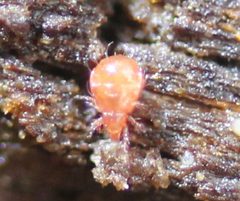
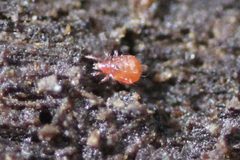
1Hypochthoniidae is a of oribatid mites (order Sarcoptiformes) within the infraorder Enarthronota. The family contains at least 4 and approximately 20 described . These mites are part of the diverse soil-dwelling microarthropod fauna that plays important roles in decomposition processes.
Pronunciation
How to pronounce Hypochthoniidae: /hɪpoʊkθəˈnaɪaɪdiː/
These audio files are automatically generated. While they are not always 100% accurate, they are a good starting point.
Identification
Members of Hypochthoniidae can be distinguished from other oribatid by characteristics associated with the Enarthronota, including a movable between the epimeres of the proterosoma and hysterosoma. Specific diagnostic features for the family require detailed examination of genital and anal setae arrangement, as well as body patterns. Identification to level requires examination of the notogastral setation and leg chaetotaxy.
Images
Habitat
Hypochthoniidae inhabit soil and litter environments, particularly in forest . They are found in the organic horizons of soils where they occupy the spaces of decomposing plant material.
Distribution
Records indicate presence in northern Europe including Denmark, Norway, and Sweden. The likely has a broader distribution in temperate regions of the Northern Hemisphere, though comprehensive distribution data is limited.
Ecological Role
As oribatid mites, members of this contribute to soil processes through decomposition of organic matter and nutrient cycling. They serve as a food source for other soil-dwelling and small vertebrates.
Similar Taxa
- LohmanniidaeAlso placed in Hypochthonioidea; distinguished by differences in body structure and setation patterns, particularly in the arrangement of notogastral setae.
- EnarthronotidaeAnother in Enarthronota; differs in details of the plate structure and leg .
More Details
Taxonomic history
The was established by Berlese in 1910. The classification within Enarthronota reflects the primitive characteristics of these mites relative to other oribatid groups.
Research status
The is relatively small and understudied compared to other oribatid families. Many descriptions date to the early 20th century, and modern taxonomic revisions are limited.