
Enarthronota
Grandjean, 1947
Family Guides
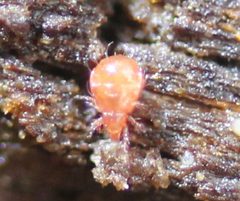
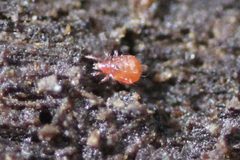
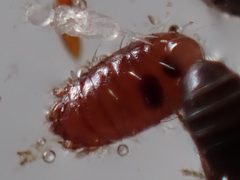
4Enarthronota is an infraorder of mites within the order Oribatida (Sarcoptiformes), established by Grandjean in 1947. It comprises approximately 14 and more than 450 described . These mites are part of the diverse soil-dwelling oribatid mite fauna, though specific ecological characteristics of the group as a whole remain incompletely documented.
Pronunciation
How to pronounce Enarthronota: //ɛnˌɑːrθroʊˈnoʊtə//
These audio files are automatically generated. While they are not always 100% accurate, they are a good starting point.
Identification
Enarthronota can be distinguished from other oribatid infraorders by specific morphological features of the gnathosoma and leg chaetotaxy established in Grandjean's original classification. The group represents one of the major lineages within Oribatida, though -level identification requires detailed microscopic examination of these specialized structures.
Images
Habitat
Members of Enarthronota are found in soil and litter , consistent with the general of Oribatida. Specific microhabitat preferences vary among constituent and .
Distribution
Enarthronota has a global distribution, with constituent recorded across multiple continents. The 131 iNaturalist observations suggest documented presence in regions with active acarological survey efforts, though comprehensive distribution mapping for the infraorder as a whole is incomplete.
Ecological Role
As oribatid mites, members of Enarthronota contribute to decomposition processes and nutrient cycling in soil . Their specific functional roles within the infraorder have not been separately quantified from other oribatid groups.
Similar Taxa
- other oribatid infraorders (e.g., Palaeosomata, Desmonomata, Brachypylina)Enarthronota is distinguished from these groups by the gnathosomal and leg chaetotaxy characters defined by Grandjean (1947), though all share the general oribatid body plan and soil-dwelling habits.
More Details
Taxonomic history
Grandjean (1947) established Enarthronota as a major division within Oribatida based on detailed morphological studies of mouthpart and leg setation patterns. The rank has been treated as either suborder or infraorder in subsequent literature, with modern sources (Catalogue of Life, NCBI) favoring infraorder.
Diversity
The 14 and 450+ represent a moderate-sized lineage within Oribatida, which contains approximately 10,000 described species across multiple infraorders.