
Ameronothrus
Berlese, 1896
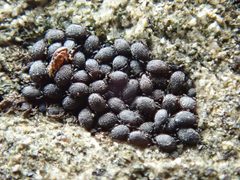
Ameronothrus is a of oribatid mites comprising approximately 13 described . The genus is characterized by littoral (intertidal) associations, with some species such as A. lineatus exhibiting remarkable arctic adaptations including extended spanning 5+ years, larviparous , and temperature-synchronized development. Several species have been described from marine and coastal environments across holarctic regions.


Pronunciation
How to pronounce Ameronothrus: /ˌæmɛroʊˈnɒθrəs/
These audio files are automatically generated. While they are not always 100% accurate, they are a good starting point.
Identification
Identification to level requires examination of morphological characters typical of the Ameronothridae. -level identification relies on detailed morphological analysis; recent descriptions include A. twitter (2021) and A. retweet (2022) from Japan. The genus can be distinguished from other oribatid genera by features of the family Ameronothridae, though specific diagnostic characters for the genus are not detailed in available sources.
Images
Habitat
Littoral and intertidal zones, particularly rocky shore . Arctic occupy high-latitude coastal environments with extended seasonal ice coverage.
Distribution
Holarctic distribution with records from Arctic regions (Svalbard), temperate coastal areas, and the British Isles. GBIF records indicate presence in Denmark, Norway, Sweden, and Great Britain.
Life Cycle
In A. lineatus: 5-year from larva to larva with surviving an additional 2–3 years; larviparous (live-bearing); all life-cycle stages capable of ; pre-moult resting stage synchronized with warmest part of summer; flexible development allowing acceleration under favorable conditions.
Behavior
Pre-moult resting stage timing synchronized with peak summer temperatures; ability to accelerate development and larviposition when climatic conditions are favorable; prolonged cold exposure positively affects subsequent and survival.
Similar Taxa
- Other Ameronothridae generaShare -level characteristics of littoral oribatid mites; generic distinction requires detailed morphological examination
More Details
Species diversity
The contains 13 described , with recent taxonomic activity including descriptions of A. yoichi (2019), A. twitter (2021), and A. retweet (2022) from Japanese researchers.
Research focus
Most detailed biological studies focus on A. lineatus, particularly arctic ; -level generalizations should be made cautiously given limited data for other .
Sources and further reading
- BugGuide
- Wikipedia
- GBIF taxonomy match
- iNaturalist taxon
- NCBI Taxonomy
- Catalogue of Life
- The biology and life history of arctic populations of the littoral mite Ameronothrus lineatus (Acari, Oribatida)
- The biology and life history of arctic populations of the littoral mite Ameronothrus lineatus (Acari, Oribatida)
- Adult survival and reproduction in an arctic mite,Ameronothrus lineatus(Acari, Oribatida): effects of temperature and winter cold
- Long life cycle and high adult survival in an arctic population of the mite Ameronothrus lineatus (Acari, Oribatida) from Svalbard
- Population dynamics and life history of the oribatid mite Ameronothrus lineatus (Acari, Oribatida) on the high arctic archipelago of Svalbard