
Heterogastridae
Stål, 1872
Genus Guides
1- Heterogaster(Nettle Ground Bug (for H. urticae))
is a of seed bugs in the superfamily Lygaeoidea, comprising approximately 20–23 and 97–100 . The group has been variously classified as , tribe, and subtribe, but is currently recognized at family rank. Members possess a distinctive M4 region with two rows of crypts housing Caballeronia bacterial , representing a stable and specific mutualistic association. The family forms a basal lineage of Lygaeoidea alongside Pachygronthidae.
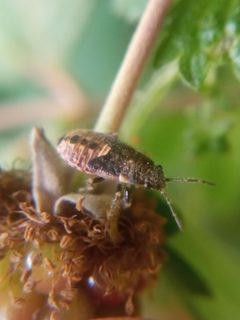
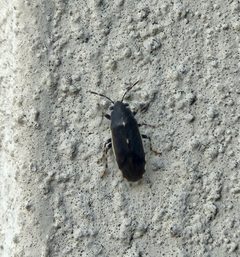
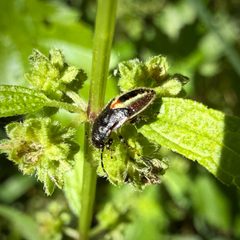
Pronunciation
How to pronounce Heterogastridae: /ˌhɛtɛroʊˈɡæstrɪdiː/
These audio files are automatically generated. While they are not always 100% accurate, they are a good starting point.
Identification
Distinguished from other Lygaeoidea by a white M4 region with two rows of crypts arranged along a central lumen, connected to M3 via an crypt-free bulb (M4B) and narrow constricted region. This crypt resembles that of Coreoidea and may represent the ancestral condition. Specific diagnostic characters for the family versus related lygaeoid families require examination of genitalia and wing venation.
Images
Habitat
Rainforest documented for at least some ; broader habitat range across not well characterized.
Distribution
Global distribution with documented records from Japan (Hokkaido, Okinawa), Australia (southeastern Queensland), Denmark, and Sweden. The comprises approximately 100 worldwide.
Diet
Phytophagous; specific feeding habits documented through plant associations including Argyrodendron actinophyllum (Malvaceae).
Host Associations
- Argyrodendron actinophyllum - plantRainforest tree in Malvaceae; specimens of Parasadoletus exsertus collected associated with this plant
- Caballeronia - gut Betaproteobacteria ; specific clades include SBE-α, SBE-γ, and Coreoidea (latter first reported outside Coreoidea in this )
Life Cycle
acquired environmentally by nymphs each ; not vertically transmitted. show universal of Caballeronia symbionts.
Behavior
sorting occurs via a constricted region between sections M3 and M4B, analogous to the mechanism in Riptortus pedestris.
Ecological Role
Engages in mutualistic gut with Caballeronia bacteria; the stable and specific nature of this association suggests potential nutritional benefits, though this role has not been experimentally verified.
Similar Taxa
- CoreoideaShares similar crypt with two rows of crypts; represents the first report of Coreoidea clade Caballeronia outside Coreoidea
- PachygronthidaeForms a basal lineage of Lygaeoidea alongside ; both represent early-diverging lineages in the superfamily
More Details
Taxonomic history
The group has been treated as , tribe, and subtribe within broader lygaeoid classifications before restoration to status.
Symbiont significance
The presence of Coreoidea clade Caballeronia in , combined with similar crypt , suggests that two rows of crypts may be ancestral for both Lygaeoidea and Coreoidea.
Sources and further reading
- BugGuide
- Wikipedia
- GBIF taxonomy match
- iNaturalist taxon
- NCBI Taxonomy
- Catalogue of Life
- Parasadoletus exsertus, a new genus and species of Heterogastridae from Australia (Hemiptera: Heteroptera: Lygaeoidea)
- Heterogaster behrensii (Uhler) (Hemiptera: Lygaeoidea: Heterogastridae): New Distribution Records, Biological Notes, and Characters Distinguishing it from the Palearctic H. urticae (F.)
- Caballeronia Gut Symbionts in Species of the Seed Bug Family Heterogastridae (Heteroptera: Lygaeoidea).