
Pachygronthidae
Stål, 1865
Genus Guides
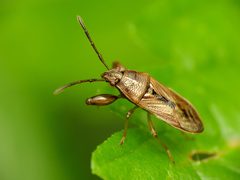
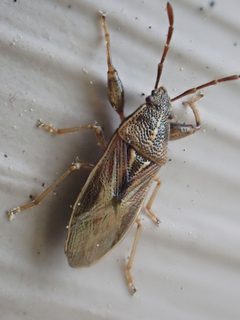
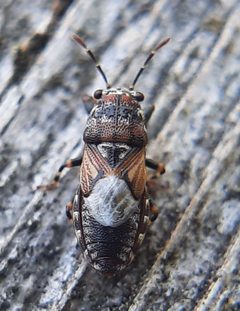
3is a of true bugs (Hemiptera) within the infraorder Pentatomomorpha, superfamily Lygaeoidea. The family comprises approximately 14 and at least 80 described , organized into two : Pachygronthinae and Teracriinae. Members are seed bugs with documented occurrence across North America, Mexico, and temperate regions of East Asia including Korea, Japan, China, and Russia.
Pronunciation
How to pronounce Pachygronthidae: //ˌpækɪˈɡrɒnθɪˌdeɪ//
These audio files are automatically generated. While they are not always 100% accurate, they are a good starting point.
Identification
-level diagnostic features for are not explicitly documented in available sources. The family is distinguished from other Lygaeoidea families by combinations of genitalic and wing venation characters used in phylogenetic studies, though these require examination.
Images
Habitat
vary by . Pachygrontha antennata occurs in urban, forested, and agricultural areas as a habitat , with showing highest environmental heterogeneity in urban settings.
Distribution
Documented from North America (Vermont, United States), Mexico, and temperate East Asia (Korea, Japan, China, Russia). Distribution records suggest broad geographic range across northern hemisphere temperate zones.
Seasonality
of Pachygrontha antennata active April through October in temperate East Asian . Phlegyas annulicrus documented in Mexico, though specific seasonal timing not detailed in available sources.
Life Cycle
stages described for Phlegyas annulicrus. activity period documented for Pachygrontha antennata. Detailed developmental sequence and instar not available in sources.
Behavior
Microbial composition in Pachygrontha antennata varies by land use type, though bacterial diversity remains constant across . are -free. No other behavioral traits documented.
Ecological Role
Pachygrontha antennata characterized as a major agricultural pest in some regions. Gut microbiome includes enterobacteria producing bioactive substances including digestive and compounds involved in contaminant dissolution.
Human Relevance
Agricultural pest status reported for Pachygrontha antennata. No other documented interactions with human activities, health, or economy.
Similar Taxa
- LygaeidaeBoth belong to superfamily Lygaeoidea and share seed-feeding habits; distinguished by genitalic and wing venation patterns requiring dissection for definitive identification.
- RhyparochromidaeAnother large Lygaeoidea with similar ground-dwelling habits; separation requires examination of male genitalia and abdominal sternite structure.
More Details
Taxonomic History
established by Carl Stål in 1865. Two (Pachygronthinae and Teracriinae) both erected by Stål. The extinct †Procymophyes (Sailer & Carvalho, 1957) placed in Teracriinae with uncertain tribal assignment.
Microbial Ecology Research
Pachygrontha antennata has been used as a model organism for studying effects on insect microbiomes, representing one of few studies explicitly linking land use variables to bacterial composition in true bugs.
Sources and further reading
- BugGuide
- Wikipedia
- GBIF taxonomy match
- iNaturalist taxon
- NCBI Taxonomy
- Catalogue of Life
- Characteristics of Microbial Communities of Pachygrontha antennata (Hemiptera: Pachygronthidae) in Relation to Habitat Variables
- Phlegyas annulicrusStål (Hemiptera: Heteroptera: Lygaeoidea: Pachygronthidae: Teracriini): immature stages, phenology, and distribution in Mexico