
Ameletidae
combmouthed minnow mayflies
Genus Guides
1- Ameletus(Upland Summer Mayfly (A. inopinatus))
is a of mayflies commonly known as combmouthed minnow mayflies. The family includes the speciose Ameletus, which reaches its greatest diversity in southwestern North America with up to 12 co-occurring at single sites. The genus Metreletus has a trans-Palaearctic distribution with three recognized species. Ameletidae larvae are aquatic and occur in lotic from small headwater streams to larger rivers.
Pronunciation
How to pronounce Ameletidae: /ˌæmɛˈlɛtɪdiː/
These audio files are automatically generated. While they are not always 100% accurate, they are a good starting point.
Identification
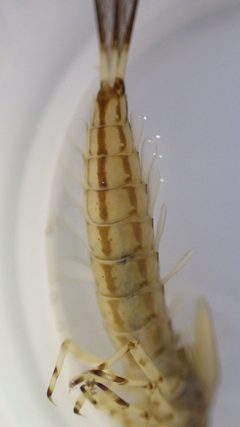
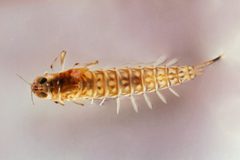
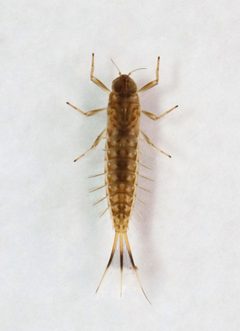
Male imagines distinguished by lobe shape. Larvae identified by gill : size of gill I and form of gills II–VII. Separate identification keys exist for western and eastern Nearctic of Ameletus.
Images
Habitat
Lotic freshwater including small headwater spring brooks to larger rivers. Found in virtually all watersheds in regions where they occur. Metreletus omelkoi has been documented in temporary streams.
Distribution
Nearctic: western and eastern North America, with highest in southwestern Alberta. Palearctic: trans-Palaearctic distribution including West-European mountains, Far Eastern Russia (Amur basin, Primorskii Krai), and Greece (Thrace).
Life Cycle
Hemimetabolous with distinct larval, subimago, and stages. have been described for some . Specific duration varies by species and environmental conditions.
More Details
Taxonomic Notes
The includes approximately 30 bisexual of Ameletus in North America. Recent revisions have synonymized several previously recognized species: A. aequivocus with A. sparsatus; A. alticolus and A. celeroides with A. celer; A. connectina and A. connectus with A. velox; A. facilis with A. vancouverensis; A. monta with A. similior; A. querulus with A. shepherdi. The Metreletus contains three species: M. balcanicus (West-European mountains), M. micus (Far East), and M. omelkoi (Far Eastern Russia).
Research Gaps
details including specific diet, growth rates, and complete developmental timelines remain poorly documented for most . The abstract-only sources for several papers indicate limited accessible ecological information.
Sources and further reading
- BugGuide
- Wikipedia
- GBIF taxonomy match
- iNaturalist taxon
- NCBI Taxonomy
- Catalogue of Life
- First record of Metreletus balcanicus (Ulmer, 1920) from Greece (Ephemeroptera: Ameletidae)
- LARVAE AND ADULTS OFAMELETUS MAYFLIES(EPHEMEROPTERA: AMELETIDAE) FROM ALBERTA
- A new species of Metreletus Demoulin, 1951 from the far eastern region of Russia (Ephemeroptera: Ameletidae)
- Life history of Ameletus longulus Sinichenkova, 1981 (Ephemeroptera: Ameletidae) in a small stream in vicinity of Vladivostok
- LIFE CYCLE AND GROWTH OF METRELETUS OMELKOI TIUNOVA, 2010 (EPHEMEROPTERA: AMELETIDAE) IN A TEMPORARY STREAM IN PRIMORSKII KRAI, RUSSIA
- A REVISION OF THE NEARCTICAMELETUSMAYFLIES BASED ON ADULT MALES, WITH DESCRIPTIONS OF SEVEN NEW SPECIES (EPHEMEROPTERA: AMELETIDAE)
- Ameletus Mayflies (Ephemeroptera: Ameletidae) of the Eastern Nearctic.