
Octoglena bivirgata
Wood, 1864
Octoglena bivirgata is a of flat-backed millipede in the Hirudisomatidae, described by Wood in 1864. It belongs to the order Polyzoniida, a group characterized by relatively flattened bodies and reduced defensive secretions compared to other millipedes. The species is known from North America.
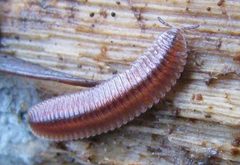

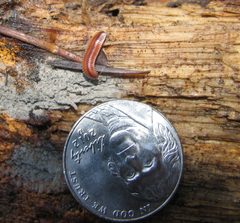
Pronunciation
How to pronounce Octoglena bivirgata: /ˌɒktəˈɡliːnə baɪˈvɜːrɡətə/
These audio files are automatically generated. While they are not always 100% accurate, they are a good starting point.
Identification
Distinguished from other North American millipedes by its combination of extreme body flattening and -level characteristics of Hirudisomatidae. The two-striped pattern, if consistent, may separate it from . Differentiated from members of order Polydesmida (also flat-backed) by belonging to the more basal order Polyzoniida, which has distinct structure and fewer segments.
Images
Appearance
As a member of Hirudisomatidae, possesses a strongly flattened body form. The specific epithet "bivirgata" (meaning "two-striped") suggests two longitudinal stripes or bands on the surface. Like other polyzoniidans, has relatively few body segments compared to many other groups.
Distribution
North America. Specific range details beyond continental occurrence have not been documented in available sources.
Similar Taxa
- Other PolyzoniidaShare flattened body form but differ in -level characteristics; Hirudisomatidae are distinguished by specific and segment features.
- PolydesmidaAlso flat-backed millipedes but belong to a different, more derived order; distinguished by segment number, paranotal structure, and defensive chemistry.
More Details
Taxonomic placement
The classification of Polyzoniida has been historically unstable. Hirudisomatidae, containing Octoglena, represents a distinct lineage within this order.
Etymology
The specific epithet "bivirgata" derives from Latin "bi-" (two) and "virgata" (striped), referring to the presumed two-striped color pattern.