
Brachyiulus
Berlese, 1884
Short Snake Millipedes
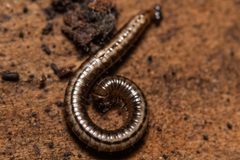
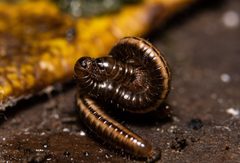
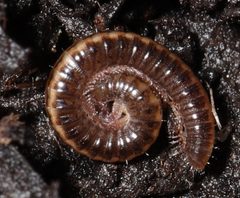
Brachyiulus is a of Julidae millipedes containing approximately eight , with most species distributed in the Mediterranean Basin of Europe and Asia. The genus includes the widespread introduced species B. pusillus, which has established globally outside its native range. Species in this genus exhibit ecological plasticity and can inhabit diverse terrestrial . Research on B. jawlowskii demonstrates significant across multiple habitat types including forests, meadows, and wetlands.
Pronunciation
How to pronounce Brachyiulus: /ˌbræk.hɪˈjuː.ləs/
These audio files are automatically generated. While they are not always 100% accurate, they are a good starting point.
Identification
Members of Brachyiulus can be distinguished from other Julidae by their relatively short body form compared to elongated snake millipedes. Specific diagnostic characters require examination of and other genitalic features typical of Julidae . The genus is part of the diverse Julidae , which contains many similar-appearing cylindrical millipedes.
Images
Habitat
include sand steppe, black maple forests, artificial pine plantations, deciduous forest (oak forest), meadow, and swamp environments. B. jawlowskii has been documented in all these types within the Dnieper river arena, showing preference for habitats with excessive or moderate edaphotopic humidification, particularly swamp, oak forest, and meadow habitats.
Distribution
Native range centered in the Mediterranean Basin of Europe and Asia. B. pusillus has been introduced widely around the world. Documented present in Germany, Italy, Türkiye, and former Yugoslavia. B. jawlowskii confirmed in the steppe zone of Ukraine, specifically within the Dnieper-Orilsky Nature Reserve.
Seasonality
of B. jawlowskii show three distinct periods: spring-summer, summer, and autumn. Each period is characterized by distinct population dynamics, with overall metapopulation stability maintained throughout the year through redistribution across the biotopical range.
Behavior
B. jawlowskii demonstrates ecological plasticity by inhabiting all investigated types within its range. stability is maintained through redistribution of individuals across a wide biotopical range rather than concentration in single habitat types.
Ecological Role
Significant component of herpetobiont . B. jawlowskii composes 6.7% of herpetobiont grouping in swamp , 4.6% in oak forest habitats, and 0.1–3.5% in other habitat types. Highest abundance dynamics occur in swamp, oak forest, and meadow habitats.
Human Relevance
B. pusillus has been introduced widely around the world, indicating human-mediated . Conservation protection in nature reserves has been observed to positively affect status of B. jawlowskii.
Similar Taxa
- OmmatoiulusBoth are Julidae with Mediterranean distributions and cylindrical body forms; distinguished by and body proportions
- CylindroiulusAnother Julidae with snake ; Brachyiulus tend to have shorter body length relative to diameter
More Details
Conservation Status
Within protected areas such as the Dnieper-Orilsky Nature Reserve, of B. jawlowskii show stable metapopulation dynamics. Conservation regimes that minimize human impact have positive effects on population state.
Research Significance
B. jawlowskii serves as a model for studying of Julidae millipedes across heterogeneous landscapes, demonstrating how ecological plasticity enables persistence in fragmented .