
Craspedosoma
Leach, 1814
Species Guides
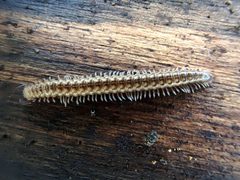
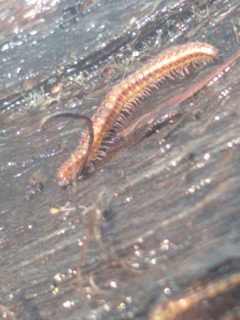
1Craspedosoma is a of millipedes in the Craspedosomatidae, order Chordeumatida. The genus contains multiple distributed across Europe and North America. Members possess complex copulatory organs with unique sperm transfer mechanisms involving cuticular brush-like projections rather than direct insertion. Studies have documented possible hybridization between nominal species, suggesting mechanical isolation barriers may be incomplete.
Pronunciation
How to pronounce Craspedosoma: //ˌkræspɪdəˈsoʊmə//
These audio files are automatically generated. While they are not always 100% accurate, they are a good starting point.
Images
Distribution
Europe and North America. Confirmed present in Germany and Italy based on occurrence records.
Behavior
Mating begins with males forcing females into position; females respond to male contact by rolling up, possibly as a test of males. Males use clasper-like copulatory organs to prevent female escape. Sperm transfer occurs via cuticular brush projections of the that brush sperm over openings of the female receptacula seminis, rather than through direct insertion.
More Details
Genitalia Anatomy
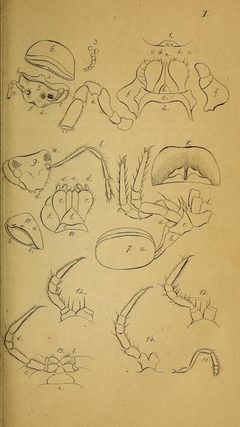
The copulatory organs of Craspedosoma transsilvanicum have been studied in detail using scanning electron microscopy and serial semi-thin sectioning. The male lacks an organ for direct sperm insertion into the receptacula seminis. Instead, sperm secretion is brushed over the openings by cuticular projections of the . Other gonopod structures (projections of the cheirites, podosternite) position the brush and receptacula openings correctly.
Hybridization Evidence
Intermediary specimens between nominal C. transsilvanicum and C. alemannicum have been documented from locations near Vienna, indicating possible hybridization. This contradicts earlier hypotheses by Verhoeff that mechanical isolation mechanisms prevent interbreeding between these species.